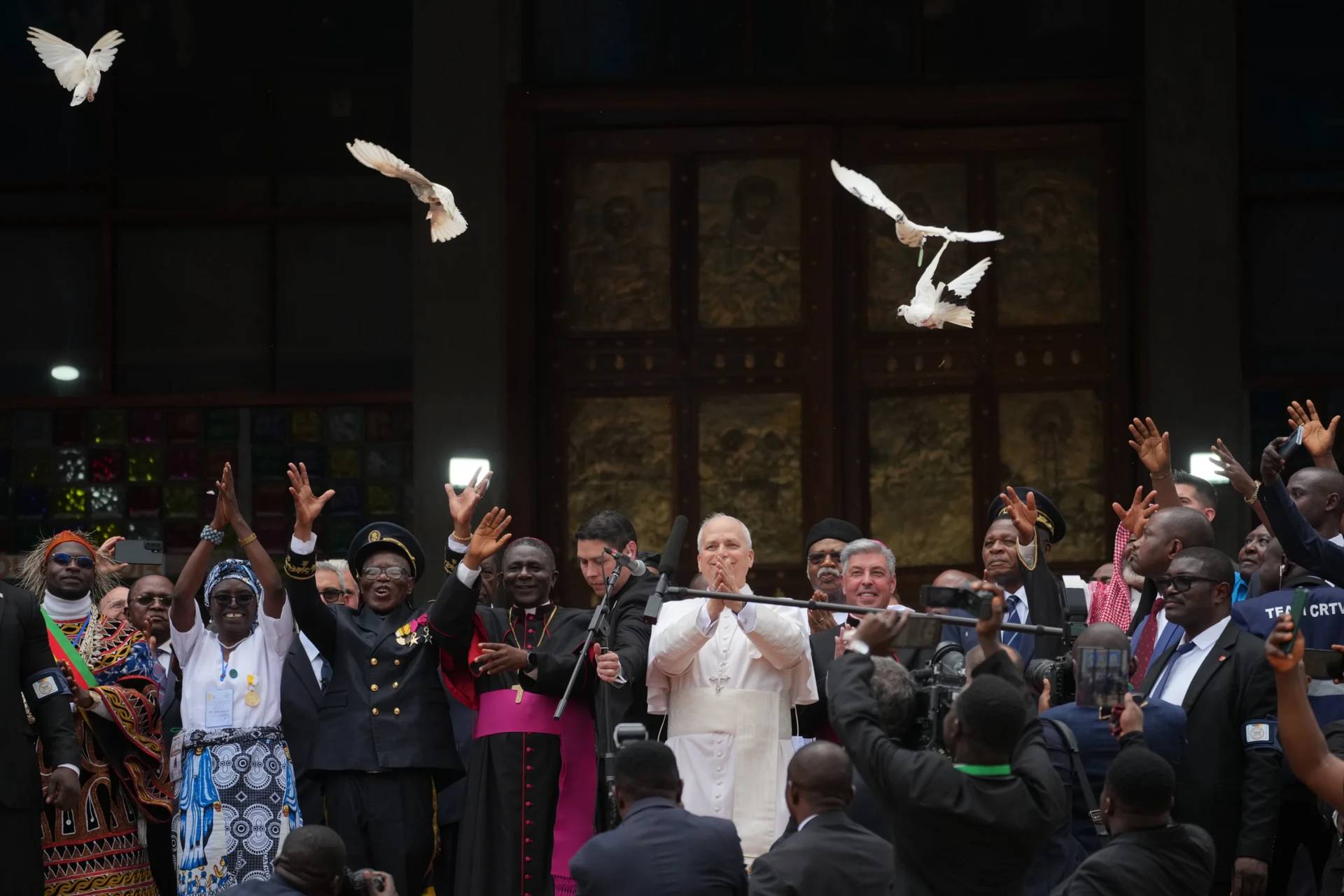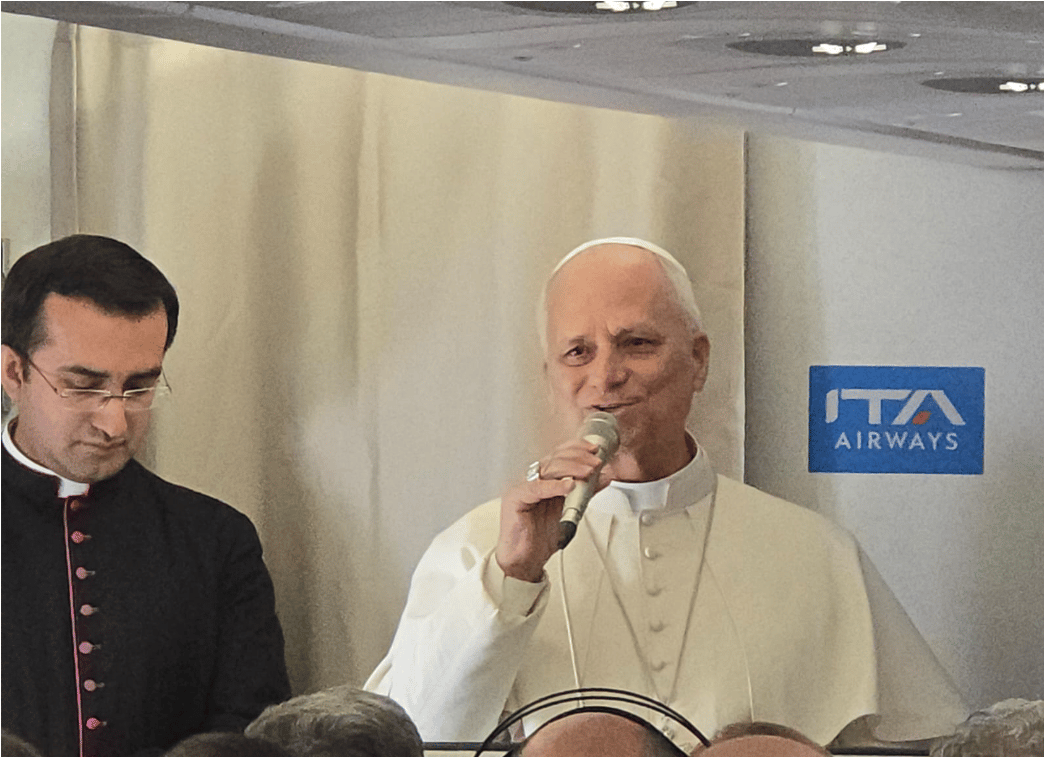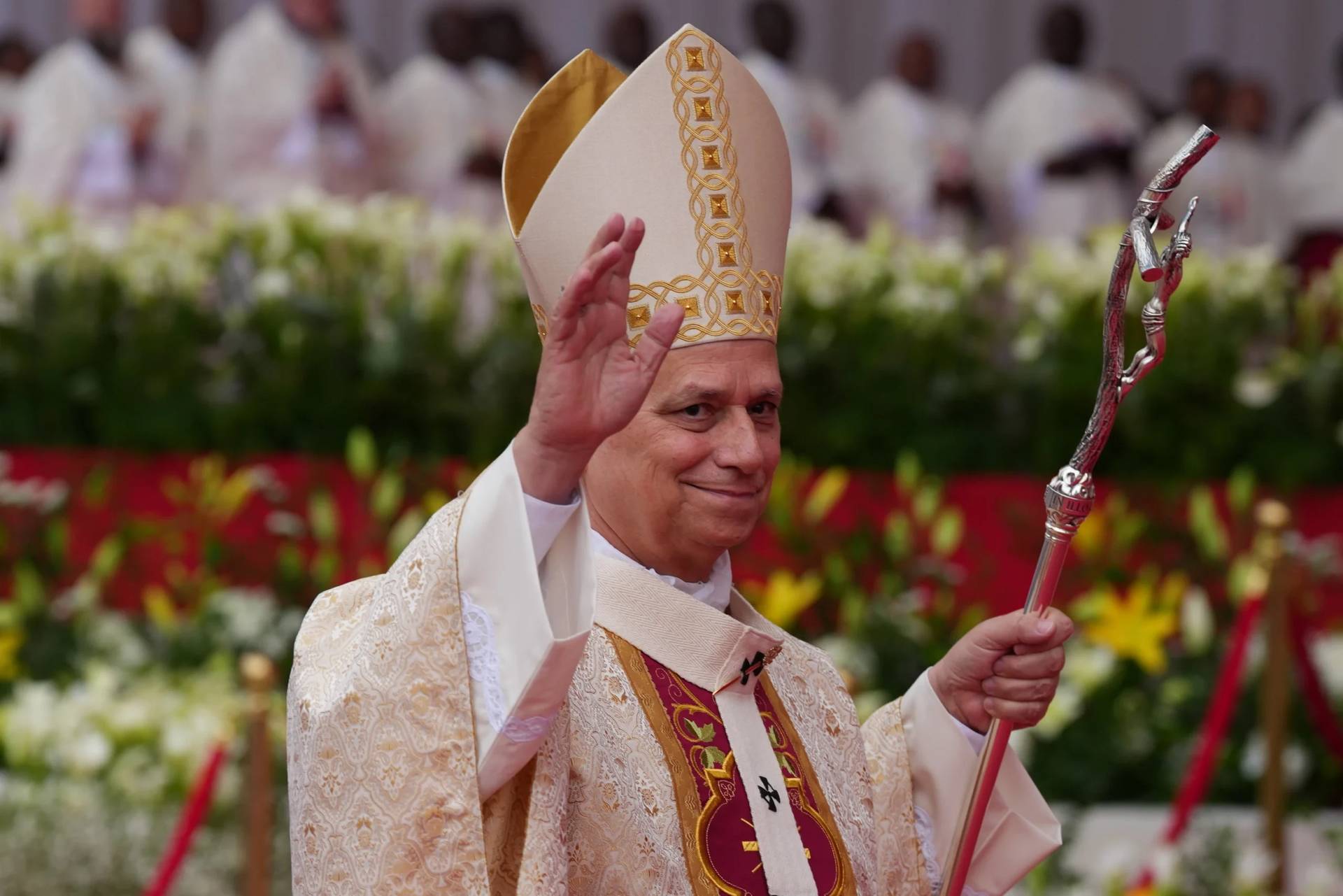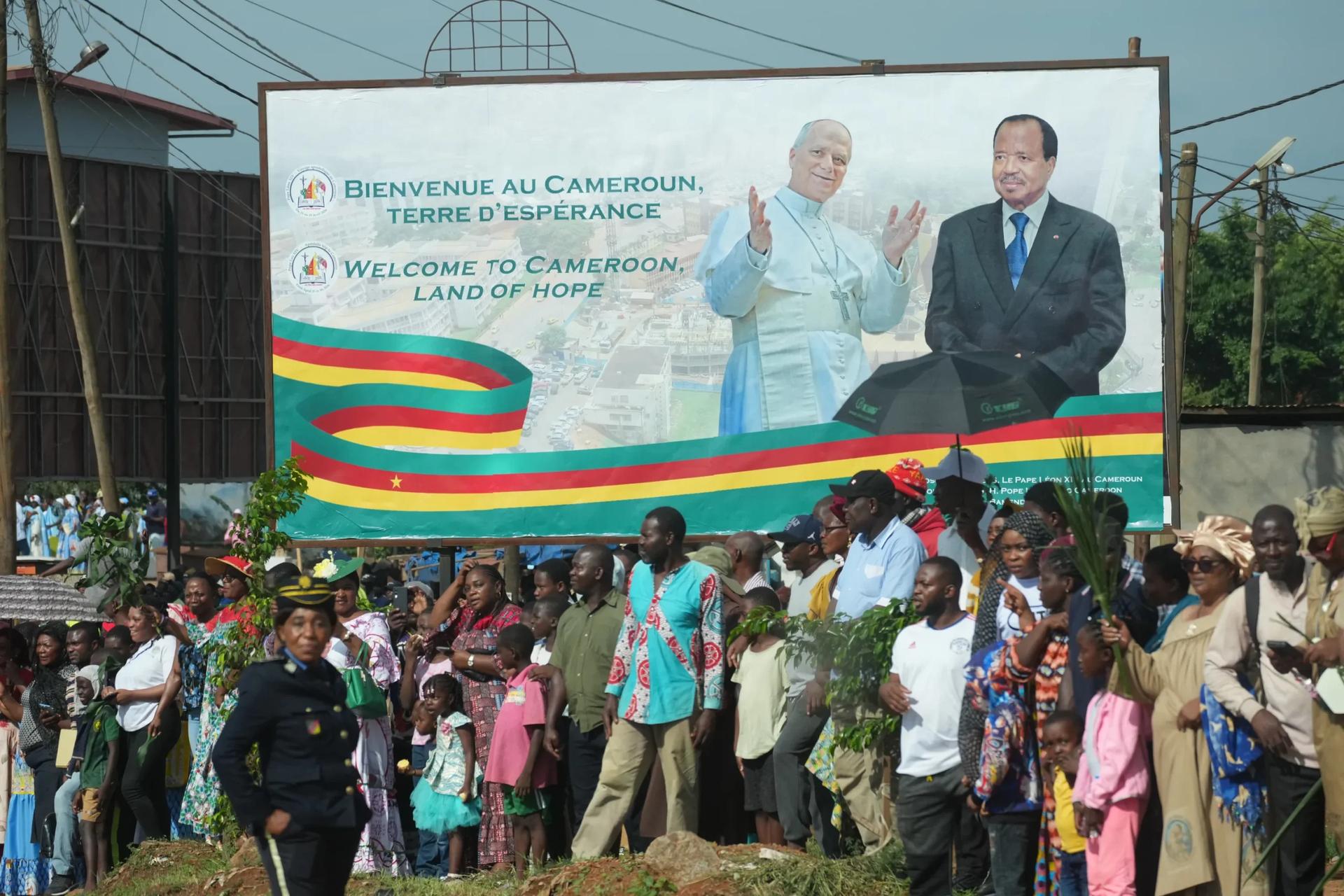
YAOUNDE – An electric atmosphere greeted Pope Leo XIV as he arrived in Cameroon on Wednesday, as shouts of joy filled the air. A high-profile delegation led by Cameroon’s Prime Minister, Joseph Dion Nguti, was on hand to welcome the pontiff.
Ecclesiastical authorities, including the Apostolic Nuncio to Cameroon and Equatorial Guinea, Archbishop José Avelino Bettencourt, the President of the Bishops’ Conference of Cameroon, and Archbishop Andrew Nkea Fuanya, as well as Cardinal Dieudonne Nzapalainga of the Central African Republic, all turned out to welcome the Holy Father.
However, it was a moment of intimate connection that defined the pope’s arrival in Cameroon.
As the special car set aside to transport the Pope to Cameroon’s Presidency, known as the Unity Palace, began to move, Pope Leo XIV rolled down the window and extended his hand to the crowds. Two people gripped the Pontiff’s hand: an elderly woman and her young, blind daughter.
“I greeted the pope!”
“I greeted the pope, I greeted the pope,” the woman chanted euphorically, dancing around as the car pulled away. She was too excited to even tell Crux Now her name.
But she said she hopes her daughter has received healing – the kind of miraculous healing that six-year-old Jacqueline Atangana received, when the Blessed Virgin Mary supposedly appeared at what’s now called the Marian Sanctuary in Nsimalen on May 13, 1986.
RELATED: Pope in Cameroon offers lesson on ‘love of neighbor’ in global diplomacy
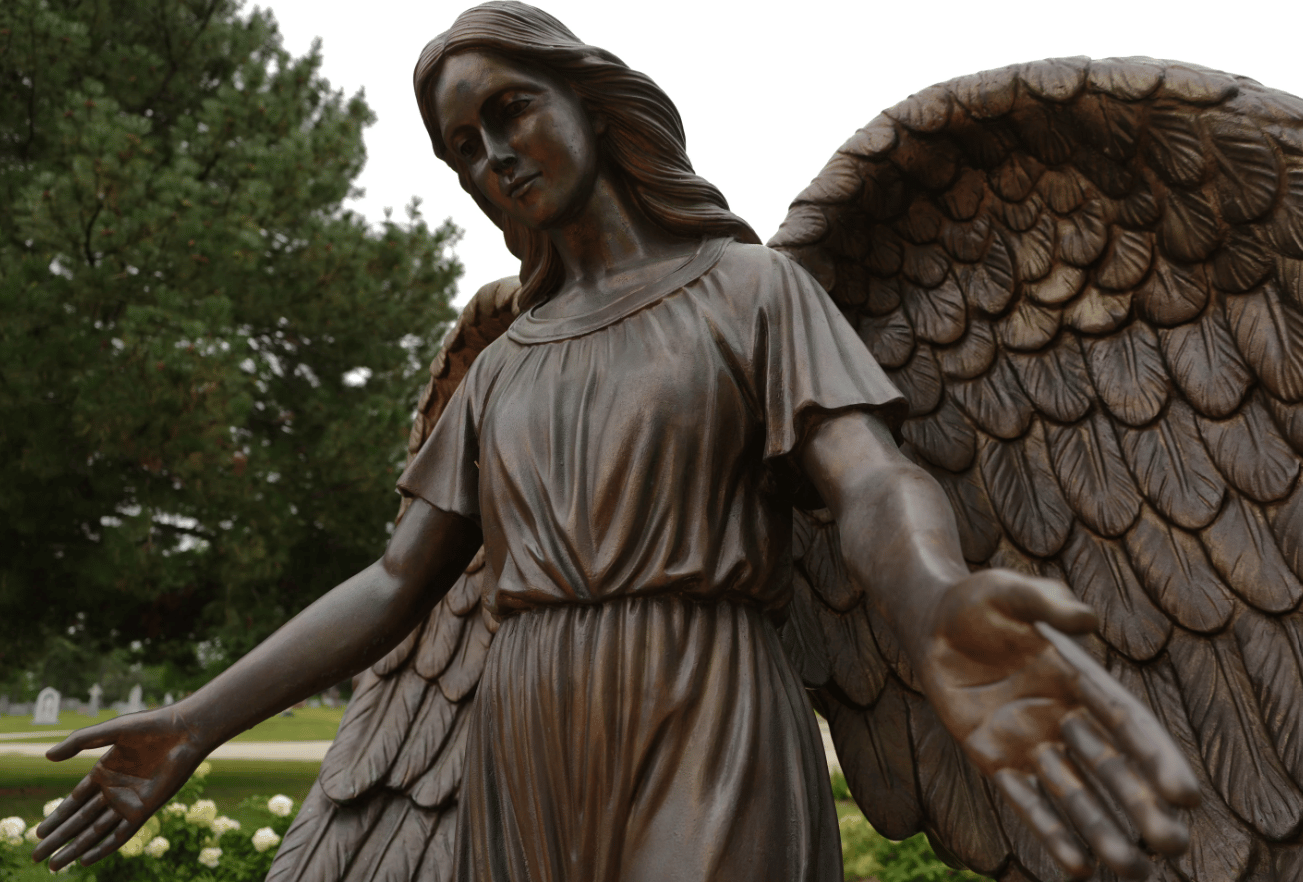
At the time, Jacqueline — who had been deaf and unable to speak from birth — was playing in the courtyard of a school run by the Daughters of Mary when she and the other children suddenly saw “a very beautiful lady” surrounded by winged beings. The lady remained nestled in the branches of a huge tree for nine days, delivering messages of peace.
Six days later, a “solar miracle,” similar to the one at Fatima, was said to have occurred at the site. A group of witnesses claimed to see the Virgin for ten minutes, and the following day, a new solar phenomenon was preceded by another apparition reported by several onlookers. These “apparitions” continued until May 22, 1986.
Among those who claimed miraculous healing were Jacqueline herself, who spoke for the first time, and a 41-year-old catechist who regained his sight.
It is this legacy that fuels the faith of the elderly woman who greeted Pope Leo.
Inspired by the encounter, scores of Christians ran alongside the Papal motorcade, cheering as he made his way toward the capital.
“I was particularly moved earlier by that Christian woman,” said Father Antoine Roger Evouna, the former Rector of the Sanctuary. “She has a little girl who is blind, and I believe both of them were able to touch the pope. It was meaningful for this young girl to be included among the people he came to represent,” he said.
Evouna, who was giving pointed analysis of the Papal visit on state radio, CRTV, contextualized the Pope’s actions within the Church’s ancient traditions, noting that the scene was a perfect reflection of the papacy’s true purpose.
“First of all, he is the Bishop of Rome; that is his primary title,” Evouna explained. “But there is another title, emphasized since the time of John Paul II, Benedict XVI, and Francis: Servus Servorum Dei, meaning ‘Servant of the Servants of God.’”
“We see this reflected in everything surrounding his travels: How he transmits and embodies this unfolding divine power. As you have seen, the people recognize and acknowledge him deeply.”
The excitement had been palpable from the start, as Cameroonians lined the streets in droves to cheer the pontiff while his convoy headed from the airport to the Unity Palace.
The Pope meets the President
At the Unity Palace, Pope Leo met with President Paul Biya, in power since 1982, and serving another seven-year mandate procured during a contested election on October 12.
Leo noted that, because of the country’s cultural and linguistic diversity, Cameroon is often described as “Africa in Miniature.” Such variety should never be seen as a weakness but as a treasure that “constitutes a promise of fraternity and a solid foundation for building lasting peace.”
He said he came to Cameroon as an apostle of peace and expressed hope that, together with the Church and civil society, Cameroon could resolve the various conflicts afflicting the country, including the separatist crisis that has been crippling the country’s English-speaking regions for the past ten years and Boko Haram incursions in the north.