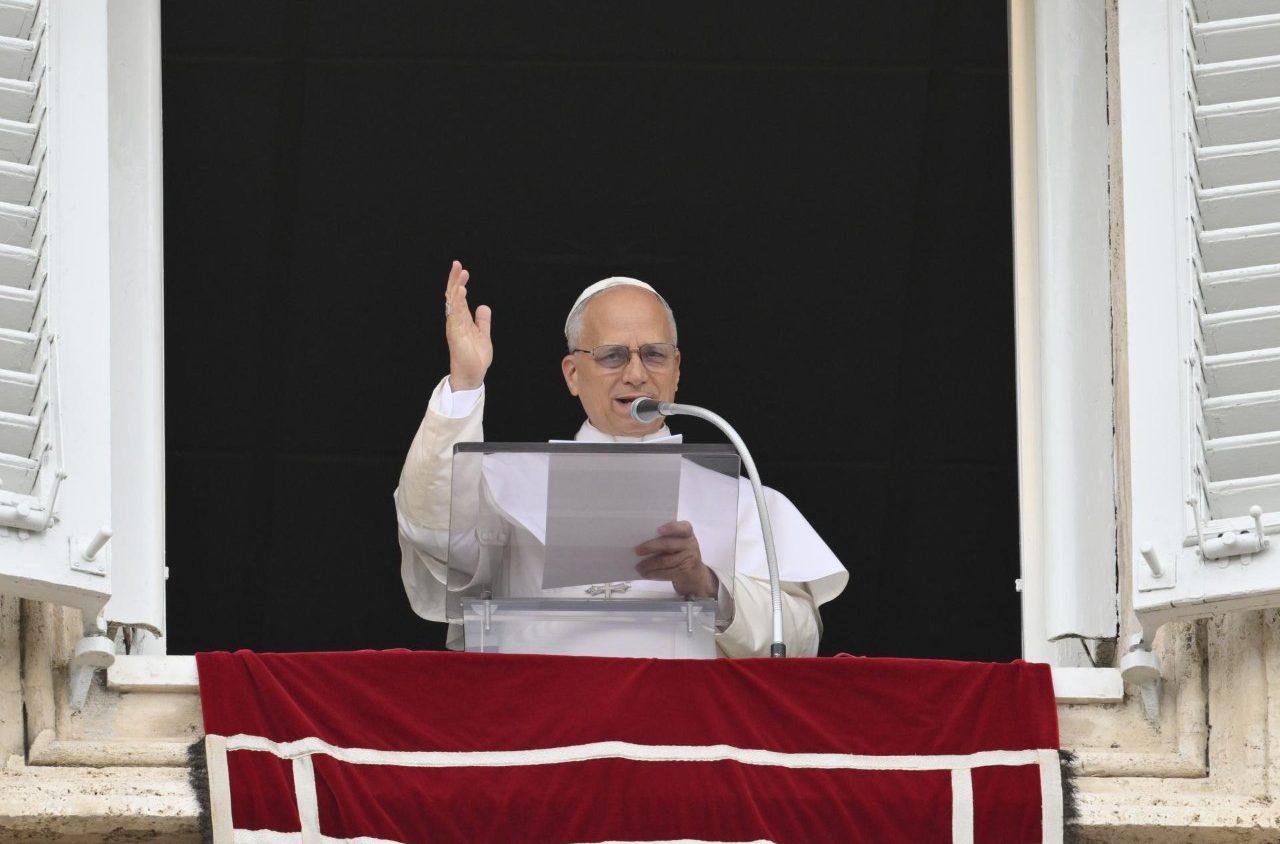
Pope Leo XIV expressed concern about reports of increased violence in the Sahel region, particularly in Chad and Mali, during his Regina Coeli address at the Vatican on Sunday.
The arid Sahel region – located at the borderland between North Africa and sub-Saharan Africa – has been plagued by attacks from various Islamist groups, including some aligned with Al Qaeda and Islamic State.
There are about 400 million people in the Sahel, which comprises at least some part of 11 nations. The vast majority of people in the Sahel are Muslim, but a significant minority are Christian.
Chad’s military said 23 soldiers were killed and 26 soldiers were injured in an attack by Boko Haram on Monday night on Barka Tolorom island.
Chad, which has a population of 19 million, has one of the highest percentages of Christians: nearly 45 percent are Christian, almost equally divided between Catholics and Protestants.
On Friday, the government of Mali said some military officers worked with jihadis and separatists who recently launched their biggest round of attacks in over a decade. The statement came after the Malian army pulled out of a military camp before the arrival of the Islamist separatist group.
Mali is over 95 percent Muslim, with Christians making up under 3 percent of the population.
In his statement overlooking St. Peter’s Square on May 10, Pope Leo noted the region had been hit by recent terrorist attacks.
“I assure you of my prayers for the victims and my closeness to those who suffer. I hope that all forms of violence will cease and I encourage every effort for peace and development in that beloved land,” the pontiff said.
The day before , Pope Leo spoke in the Vatican to members of the John Paul II Foundation for the Sahel, which was founded by the now-sainted pontiff in 1984, after his first visit to Africa.
“In a world facing complex challenges such as geopolitical tensions, inequalities, wars, issues linked to insecurity and terrorism, political and economic instability, and climate crises—the consequences of which include, in particular, migration flows—the relevance of this Foundation’s mission is clearer than ever,” the pontiff said on May 9.
He also said to come to the aid of victims of natural disasters or vulnerable people “is indeed a matter of justice before it is a matter of charity.”
Also on Saturday, Pope Leo met with a delegation from the Muslim community of Senegal, the westernmost country in the Sahel.
“You come from Senegal, the land of ‘teranga’ – hospitality and solidarity – a land of strong family ties, conviviality and peaceful coexistence between Christians, Muslims and believers of other traditions,” he told them.
“This reality forms the foundation of dialogue between peoples distinguished by their religious affiliation and ethnic origin. This treasure of fraternity, which must be carefully safeguarded, is a precious asset not only for your nation, but for all of humanity,” Leo said on May 9.
Senegal is just over 97 percent Muslim, with a Christian population of under 3 percent. Despite its small size, the Catholic Church in Senegal is comprised of one archdiocese in the capital Dakar, as well as six other dioceses.
Pope Leo told the Muslim group the values borne by the spirit of “teranga” and interreligious dialogue “are a valuable means of easing tensions and building lasting peace.”
“Unfortunately, armed conflicts persist on the African continent, causing serious humanitarian crises and deep-seated inequalities that afflict entire populations on a daily basis, not to mention the worrying rise of violent extremism,” the pontiff said.
“Added to this are growing flows of migrants and refugees, hate speech that poisons the social fabric, the weakening of family ties and the erosion of ethical and spiritual values, particularly among the young,” Leo added.
He concluded by asking people to pray that God “may rekindle the desire to understand one another better, to listen to one another and to live together in respect and fraternity.”
“May He grant us the courage to take the path of dialogue, to respond to conflicts with gestures of fraternity and to open our hearts to others, without fearing differences,” the pope said.
Follow Crux Now on X: @Crux