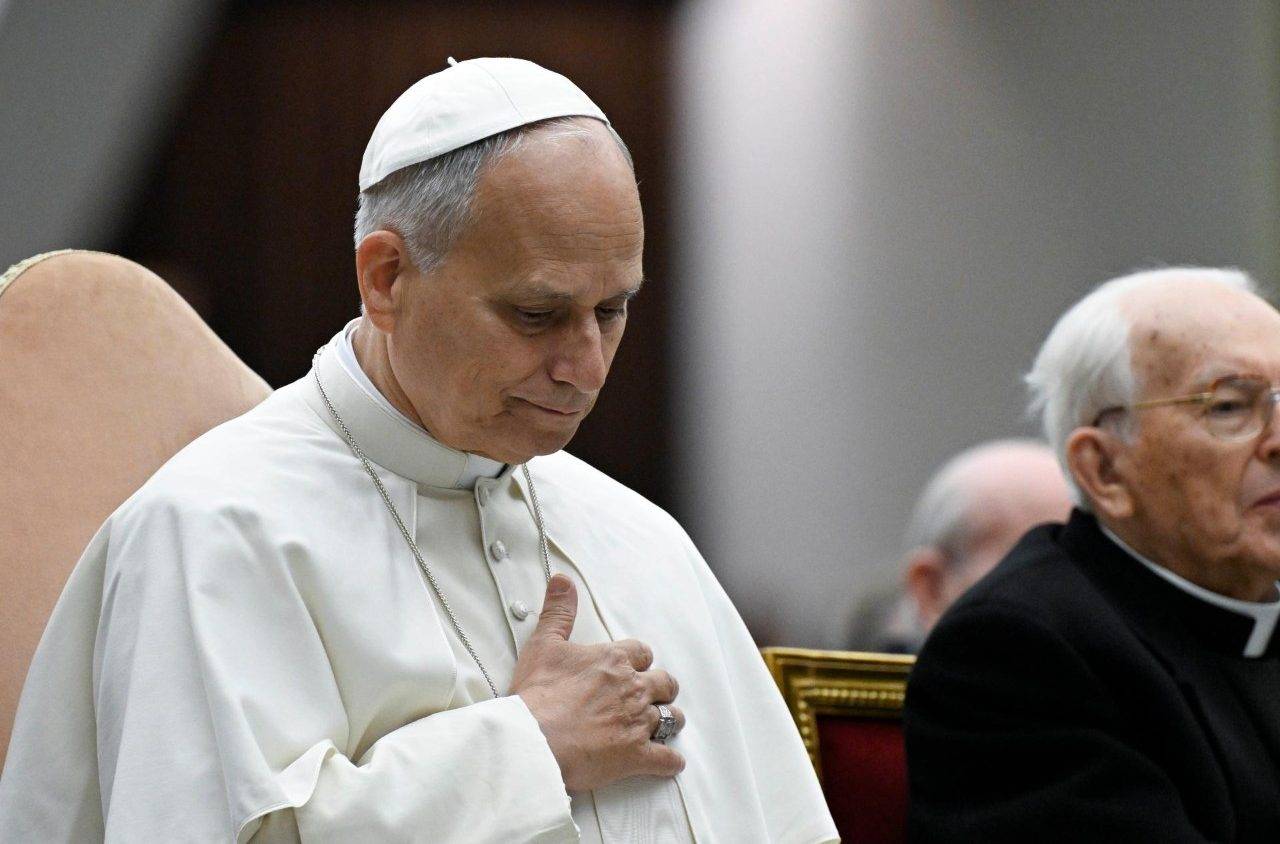
While many political observers have been assessing Pope Leo XIV’s first year in the papal office, leading African prelates are warning against such assessments and instead focusing on the place and role of the papacy as one of global moral leadership.
In exclusive comments to Crux Now, Bishop Mathew Hassan Kukah of the Nigerian Diocese of Sokoto said the pope is not driven by term limits’ “first 100 days” metrics or by political manifestos.
“The Papal office has no term limits and is not seeking to tick boxes in his first one hundred days of first anniversary,” Bishop Kukah told Crux Now.
“The focus,” Kukah said, “is faithfulness to the mission and vision of the Church which is the salvation of souls.”
Bishop Kukah described the pontiff as a leader with his “feet firmly on the ground,” and highlighted a consistency in the Pope’s focus on enduring global challenges such as peace, justice, and reconciliation.
He said the pope serves as an essential moral compass in a world increasingly defined by deepening inequality and a focus on raw power.
“We expect him to continue to shine the moral light on a world where inequality is deepening, a world seeking to focus on raw power,” Kukah said. “He will continue to offer a moral compass to help our world heal, to remind us to be our brothers’ and sisters’ keepers.”
Bishop Edward Hiiboro Kussala of Tombura-Yambio in South Sudan chose to show gratitude to Pope Leo XIV on the occasion of his first anniversary, especially as it came in the wake of the pontiff’s visit to Africa.
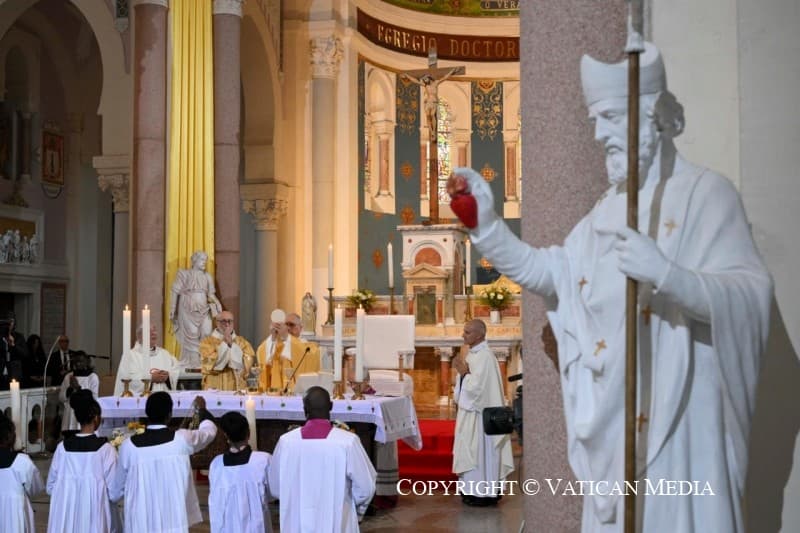
The Supreme Pontiff was in Africa last month on a pastoral journey that took him to four African countries: Algeria, Cameroon, Angola and Equatorial Guinea. He did not travel to South Sudan, but Hiiboro says the pontiff “walked the Beatitudes for Africa.”
“From the heart of South Sudan, a nation still longing for lasting peace and healing, I offer gratitude, hope, and prayerful reflection as we mark one year of the Pontificate of His Holiness Pope Leo XIV,”Hiiboro said in a statement sent to Crux Now.
“This anniversary comes shortly after his first Apostolic Visit to Africa, a journey that touched hearts, awakened consciences, and renewed hope across our continent and the world.”
The South Sudanese prelate drew parallels between Pope Leo XIV and Pope Francis, recalling Francis’ efforts towards peace in South Sudan.
“We in South Sudan remain deeply moved by the witness of Pope Francis, whose pilgrimage of peace left an unforgettable mark on our nation,” Hiiboro said, recalling particularly Pope Francis’s powerful 2019 gesture of kneeling and kissing the feet of South Sudanese leaders.
Hiiboro said that gesture “became a prophetic call to reconciliation, unity, and moral responsibility.”
“Now,” Hiiboro said, “Pope Leo XIV continues this Gospel mission by presenting the Beatitudes as a path for humanity and a vision for a renewed world. Through the Gospel, he reminds us that true greatness is found not in domination, but in humility, mercy, justice, holiness, and peace.”
The prelate drew a sharp contrast between an African continent that is “rich in faith, youthful in spirit, and alive with hope, yet burdened by conflict, poverty, corruption, and fragile social structures.”
He said Pope Leo XIV speaks directly to this reality, especially in South Sudan and across the continent.
“For South Sudan,” the bishop also said, “his message is especially urgent. Our peace remains fragile, yet our faith remains strong. Our young people continue searching for hope, opportunity, healing, and a future worthy of their dignity.”
The South Sudanese prelate then reflected of Pope Leo XIV’s pontificate as a whole, emphasizing the need for humanity to return to spiritual foundations and the cultivation of moral leadership.
He called for humanity to place God back at the center of society, urging the formation of leaders guided by integrity and conscience rather than political expediency.
Central to this vision is the recovery of the Church’s prophetic mission to defend the dignity of the poor and forgotten, while actively working to rebuild trust in divided communities. By promoting justice, mercy, and reconciliation, and by accompanying the youth with genuine opportunities, the bishop believes the Pope is charting a course to build lasting peace through honest dialogue, encounter, and truth.
Reflecting on the spiritual lessons of the Pope for his nation and the continent, Bishop Hiiboro asserted that a peaceful nation must be built first in the human heart before it can be sustained by institutions.
As the Church celebrates the first anniversary of Pope Leo XIV, the Bishop offered prayers that the Pope’s ministry will awaken the conscience of nations and heal a wounded world. Invoking the Risen Lord, he hopes for a future where faith walks hand-in-hand with justice, transforming hearts and making the people of South Sudan and all of Africa instruments of God’s peace.
“He reminds us that leadership must become service,” Hiiboro said, “and that the dignity of every human person must remain at the center of society.”