
MUMBAI – India’s Supreme Court has given an early procedural victory to religious minorities who are challenging a state-level anti-conversion law they say is unconstitutionally restrictive, invasive, and punitive – but there remains a long legal row ahead.
The Supreme Court has raised constitutional questions over Rajasthan State’s Prohibition of Unlawful Conversion of Religion Act, 2025, and asked the Rajasthan government to respond formally to a petition challengning the constitutionality of the law.
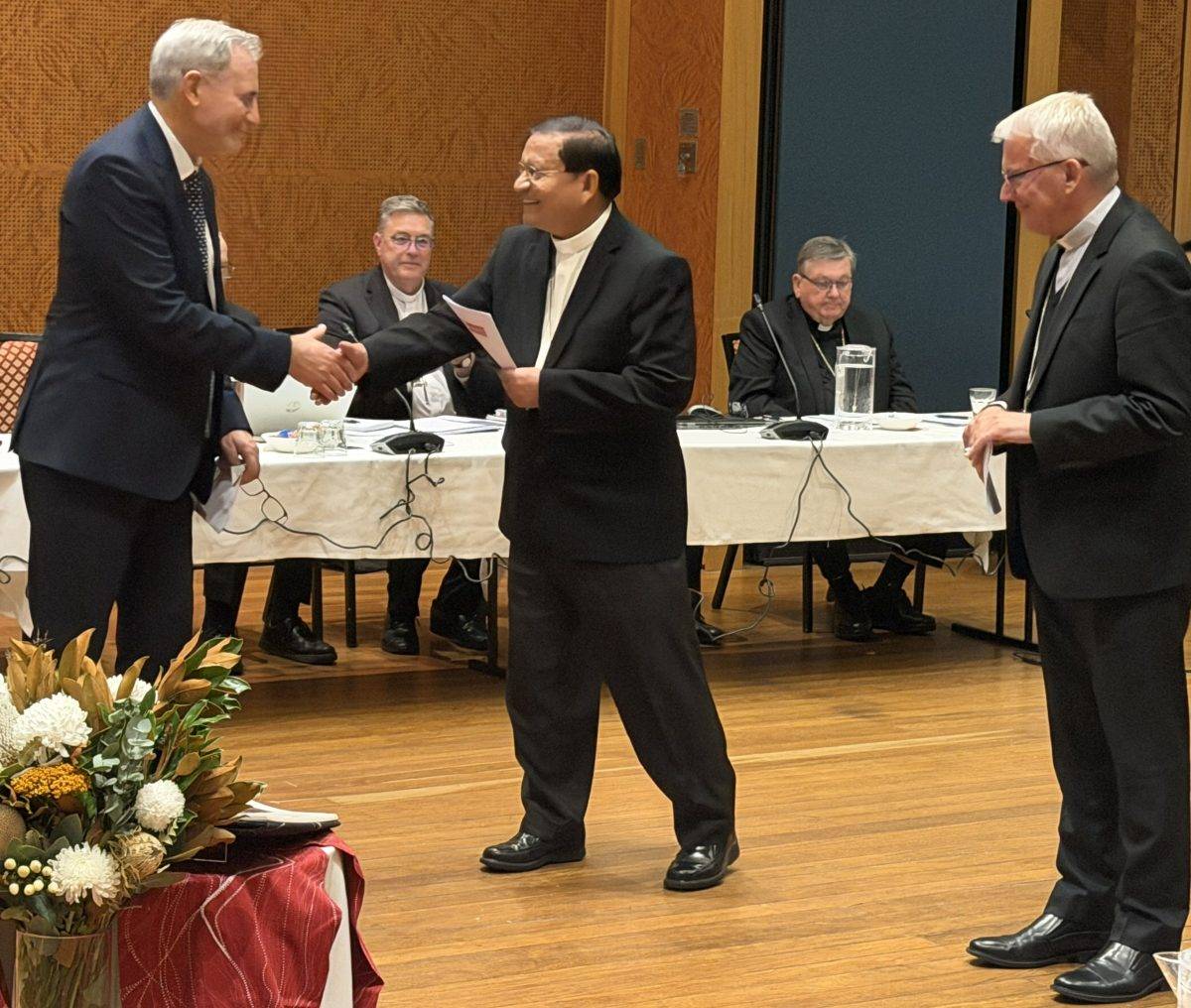
The bishops of India are among those challenging a state-level anti-conversion law in the nation’s supreme court, saying the law grants excessive and arbitrary powers to administrative authorities.
The law appears to allow officials to confiscate property and even demolish structures belonging to individuals or institutions accused of facilitating unlawful conversions without prior judicial determination of guilt.
The Catholic Bishops’ Conference of India have petitioned the nation’s Supreme Court, claiming those and other provisions of the Rajasthan law violate due process and enable punitive actions based on mere suspicion.
Bishop John Carvalho of Ajmer Diocese, Rajasthan told Crux the bishops have joined multiple petitioners in a case challenging the law under several articles of the Constitution of India.
“The Rajasthan government has enacted very stringent anti conversion law in the state,” Carvalho said.
Petitioners – including minority groups of Rajasthan and other petitioners across India, including the CBCI – are saying the anti-conversion laws violate “core constitutional rights like freedom of religion (Article 25), personal liberty (Article 21), privacy, autonomy, and equality (Article 14), freedom of expression, and the right to property,” Carvalho told Crux.
“Many innocent people are targeted in the pretext of the law,” Carvalho said.
“If something happens against the constitution of India then legal courts should take up the issue,” he said. “We pray that everyone be treated equally in the country,” Carvalho also said.
The CBCI has also questioned the language of the law, which prohibits conversion achieved through a broad list of means, including “allurement,” “misinformation,” or “any other fraudulent method.”
The bishops say those terms are so vague they could be used to target voluntary religious decisions or peaceful religious expression, warning as well that ordinary acts of faith, charity, or pastoral work could be construed as coercion under the law.
Another major concern of the bishops is the procedure the law imposes on anyone intending to convert.
Petitioners say the law requires individuals and religious leaders to file advance declarations with district authorities and subjects those who fail to file properly to heavy fines and imprisonment.
The CBCI argues that this compels people to disclose deeply personal choices to the state, infringing upon privacy and autonomy. They have also raised objections to the reverse burden of proof, claiming it shifts the responsibility onto the accused to prove that a conversion was not forced a stance they say contradicts fundamental principles of criminal justice.
Auxiliary Bishop Dominic Savio of Bombay, a canon lawyer who has been vocal in opposition to the legal measures under review, told Crux via email there are currently 12 states in India that have enacted or are considering problematic anti-conversion measures.
Savio says the teachings of Catholic Church align with India’s constitutional principles.
“The Church supports public order, equality, fraternity, liberty, and genuine secularism,” Savio wrote.
“It seeks to dismantle unjust barriers,” Savio wrote, “[to] heal divisions, promote harmony, and spread altruistic love — echoing Christ’s mission in Luke 4:18: ‘The Spirit of the Lord … has sent me to proclaim release to captives … to set at liberty those who are oppressed’.”
Savio also noted that the Catholic Church rejects forced conversions.
“In fact, such conversions are deemed invalid,” he wrote. “The Church insists on freedom of intention,” he wrote, “because authentic faith can never be coerced.”
These laws do not uphold the Constitution,” Savio wrote, “they eviscerate it.”
“They reduce religion from a matter of conscience to a matter of state permission,” he wrote. “They transform the citizen’s right to follow God into a privilege revocable by mob or magistrate,” he wrote.