The Catholic Church in Japan will gain new members this Easter, with scores of people set to receive baptism in Tokyo alone.
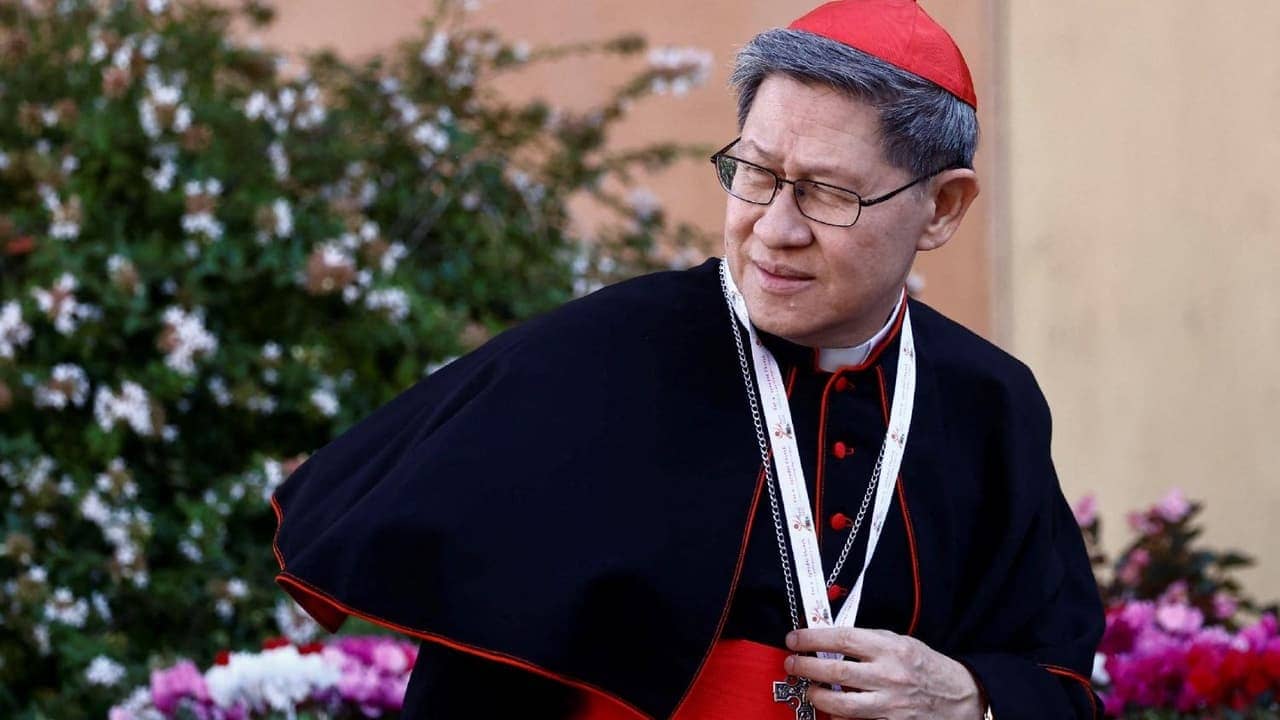
“In Tokyo alone this Easter, more than 100 individuals will be baptized,” Cardinal Isao Kikuchi of Tokyo told Crux Now.
There has been a Catholic presence in Japan for nearly five centuries, during which the faithful in the country have faced long stretches of frequently ruthless persecution.
Japan began opening to the wider world in the second half of the nineteenth century, and the country’s post-WWII constitution guarantees religious liberty.
Today, however, Catholics account for less than one-half of one percent of total population in Japan, a country of 123 million people.
Two of the people preparing to receive baptism this Easter are a mother-daughter pair: 8-year-old Minami Kimura, who attends Shirayuri Gakuen Elementary School in Tokyo, and Maiko Kimura, her mother, will receive baptism on Easter Sunday at Tokyo’s Kojimachi Church.
The younger Kimura expressed her wish to be baptized as a Catholic after encountering Jesus and the faith in kindergarten at Shirayuri Gakuen, a prestigious French mission school founded by the Convent of St. Paul of Chartres in the heart of the capital.
“I don’t remember much because I was little,” Minami told UCAN News, which profiled her earlier this month, “but I felt that Jesus was like a family member.”
Kikuchi told Crux Now such stories are more common than one may realize.
“Catholic Japan publishes stories of those preparing for baptism every year during Lent,” Kikuchi said.
Kikuchi said Catholic schools in Japan play an important role of witness to the faith in Japanese life, even as they prepare pupils for leadership roles and educate for responsible citizenship.
“Evangelization through school education has long been a priority of the Catholic Church’s mission in Japan,” Kikuchi said.
“Even today, although Catholics remain a small minority in Japan, many graduates of Catholic schools are active in business and politics,” Kikuchi noted.
“Through these schools,” the cardinal-archbishop of Tokyo said, “we also have opportunities to engage with students’ parents.”
“While catechism is not part of the official curriculum, extracurricular and PTA activities allow the Church to share the message of the Gospel with those we might otherwise never reach,” Kikuchi said.
“Of course,” he added, “the Church never forces anyone to be baptized.”
“Faith,” Kikuchi said, “is a matter of personal choice.”
Reflecting on the historical impact of Catholic education, Cardinal Kikuchi said cases like the Kimuras’ “represent a significant achievement for Catholic schools in Japan.”
“I hope such examples continue,” he said, “even as we face a declining number of religious vocations.”
Catholic missionary activity in Japan suffered a serious setback in the early seventeenth century, when the Tokugawa Shogunate outlawed and brutally suppressed Christianity in the country.
Significant foreign missionary activity resumed in Japan only with the Meiji restoration in the second half of the nineteenth century.
French missionaries encountered Christian faithful – “Hidden Christians” – who had kept the faith in secret through long centuries of seclusion and suppression.
Missionaries’ initial efforts focused on rural itinerant ministry, bringing the Gospel to villages across Japan.
In 1890, however, four mission superiors in Nagasaki – a center of Japanese Christianity – decided to shift the Church’s priorities, emphasizing school education and social welfare institutions to reach more people with the Gospel.
This led to the establishment of numerous educational institutions run by both men’s and women’s congregations throughout the early twentieth century.
As vocations to religious life and missionary religious service began to dwindle in the bottom half of the last century, Japan began to feel the pressure of declining numbers as well.
“Maintaining Catholic identities in our schools despite fewer Catholic teachers and sisters remains a vital treasure for the Church and her educational mission,” Kikuchi said.