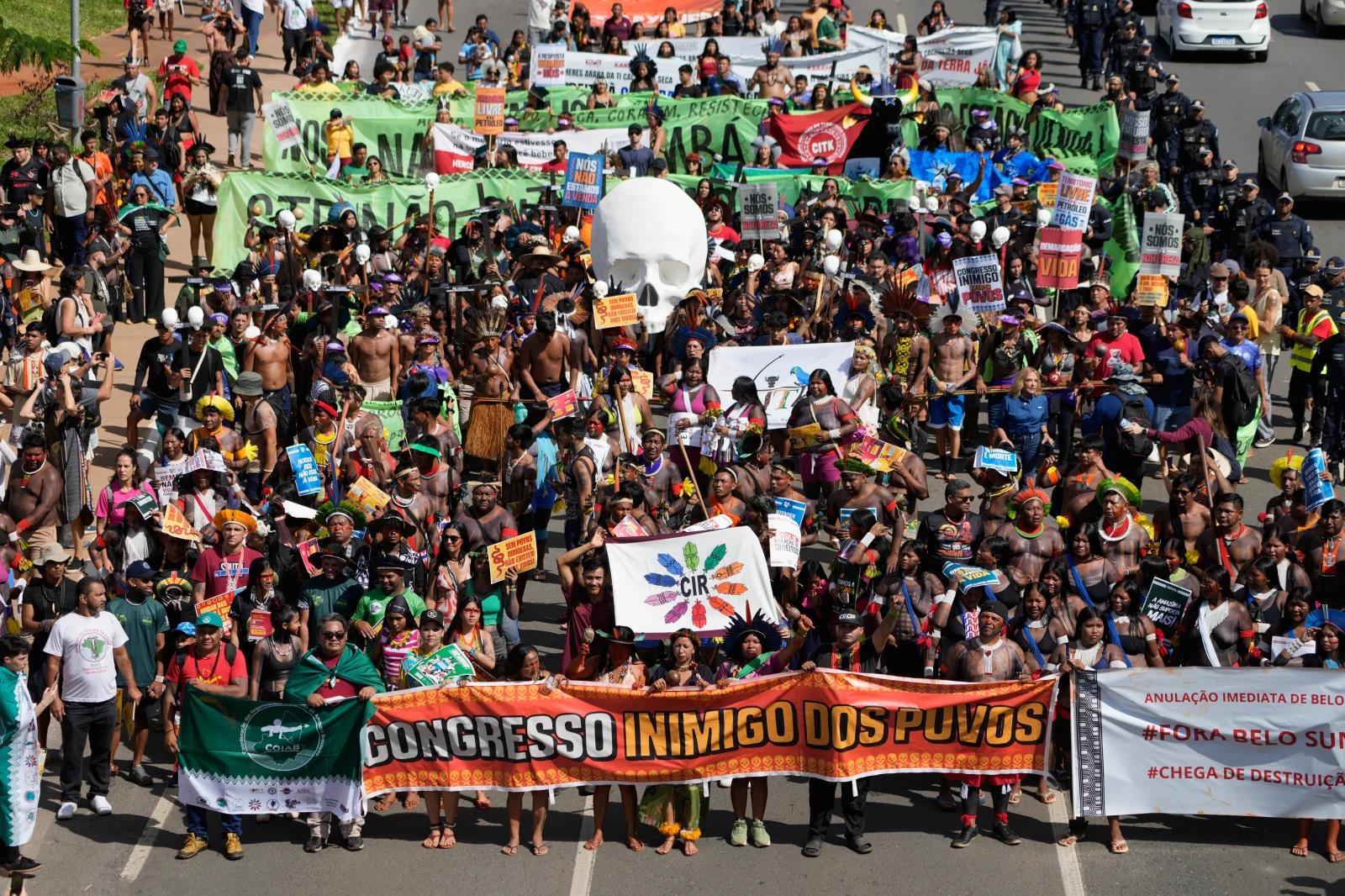
SÃO PAULO – The number of killings linked to land disputes doubled in Brazil in 2025 compared to the previous year.
A report released by the Bishops’ Conference’s Land Pastoral Commission (known by the Portuguese acronym CPT) shows 26 people were murdered last year as a result of agrarian conflicts. In 2024, the CPT had reported 13 deaths.
The victims are landless workers, Indigenous activists, and members of other traditional communities.
The annual review, which reached its 40th edition in 2026, showed an overall decline in land disputes and violent incidents in 2025, but the number of murders doubled.
Land disputes fell from 2,207 cases in 2024 to 1,593 in 2025 and the number of violent incidents dropped from 1,548 incidents in 2024 to 978 in 2025.
The number of victims also fell from 1,181 people in 2024 to 581 last year.
The apparent contradiction, in the opinion of the CPT’s coordinators, is the result of different policies adopted by the federal government and state administrations.
“While President Luiz Inácio Lula da Silva’s administration has taken a few relevant measures, such as the creation of a national committee to combat rural violence, states with a long history of agrarian conflicts have continued attacking those who struggle for land,” said Carlos Lima, one of the CPT’s national coordinators.
That was the case in Rondônia State, in the Amazon region. Last year, seven killings occurred there, placing it at the top of the list of Brazil’s deadliest states for land disputes, alongside Pará State, also in the Amazon.
In Nov. 2025, 400 landless families who had been camped in a rural area in the municipality of Machadinho d’Oeste were violently evicted by police, who made unprecedented use of an armored vehicle during the operation.
The group had struggled for years for the expropriation of a vast farm in the region that partially occupies public lands. In 2022, the families bought a small property near the estate they had been demanding for agrarian reform.
“Justice ruled that they should leave the area, but they were given no time to relocate. The police simply entered the area and forced them out,” Catalan-born Father Josep Iborra Plans, a CPT advisor, told Crux Now.
In the following days, people who returned to collect their belongings were violently persecuted.
“Some of them were arrested inside their homes. Some were tortured in order to reveal where other members of the group were hiding. Police placed wet towels over their faces to suffocate them,” Iborra said.
Two men who returned home to collect food for their pigs were chased by armed men. One of them fled into the woods and remained hidden for hours. The other was detained and tortured.
“Even the small plot of land owned by the families was invaded and partially destroyed,” Iborra said.
The worst episode occurred when two landless men were trying to leave the area in their car. Police claimed they were armed and had tried to break through a blockade, so officers shot them dead.
“The police said the men fired at them, but many landless workers say that is a lie,” the priest said.
A few days later, federal officials involved in mediating agrarian conflicts visited the area and organized a public hearing. Rondônia police surrounded the venue and demanded identification from all activists attending the meeting. More than 200 landless workers were booked by police officers.
The families went to live with relatives in other regions or moved to nearby cities in search of work. But the persecution continued in municipalities such as Machadinho d’Oeste.
“There have been reports of landless workers being beaten or chased by armed men in the city. They have been continually monitored,” Iborra added.
The priest said authorities in Rondônia are accustomed to dealing with landless movements through violence.
“The police commander was producing and posting videos portraying himself as the man saving Rondônia from criminals. He later announced he would run for governor,” Iborra said.
To Iborra, it was also a kind of message of spite directed at the organizers of the United Nations Climate Change Conference (known as COP30), held in Belém, Pará State, between Nov. 10-21.
Carlos Lima argued that impunity plays a central role in the way local powers decide to repress land movements.
“Violence has become normalized. The state has failed to promote agrarian reform – and it has also failed to punish those who kill agrarian reform activists,” he said.
According to Cecília Gomes, another member of the CPT’s national coordination, the recent involvement of organized crime – militias and drug cartels – in Brazil’s land disputes has also contributed to increased violence.
“The state is complicit, as is agribusiness, in many cases,” Gomes said.
Criminal groups do not threaten activists and communities the way groups traditionally linked to rural violence usually do.
“They simply kill them directly, with no mercy,” she added.
Land disputes used to be even more deadly years ago. In 2016, the CPT reported 61 killings, then the highest number on record.
That was the year then-President Dilma Rousseff was impeached and Vice President Michel Temer took office, dismantling government agencies and programs dealing with human rights and land disputes. One year later, the number rose to 71.
In the following years, while violence continued to grow in rural Brazil – alongside record deforestation rates during President Jair Bolsonaro’s administration (2019-2022) –, the number of killings fluctuated between 20 and 30 annually, reaching 47 in 2022.
“During those years, ranchers and local politicians created agro-militias across Brazil in order to violently confront Indigenous and landless workers’ groups. Those agro-militias are still operating today,” Carlos Lima said.
The CPT and other organizations had high expectations for President Luiz Inácio Lula da Silva’s government. But he failed to promote deep changes in the rural world, Lima said.
“His administration started badly and is ending badly as well,” he said.
Lula took a year and a half to present a land reform program, which the CPT evaluated negatively. Instead of promoting the expropriation of public lands occupied by ranchers, he prioritized market-based solutions, according to Lima.
“He also appointed people indicated by political allies to positions connected to land reform, even though they lacked technical expertise,” he added.
In Lula’s first year, the CPT reported 31 killings. The number fell to 13 the following year, before rising again to 26 in 2025.
“With more than 1,500 land disputes, violence remains glaring in Brazil,” Lima said.
Cecília Gomes said that one of the CPT’s main tasks is to denounce agrarian violence – and to highlight how traditional populations and peasant communities continue resisting under such difficult conditions.
“Our prophetic role is to demonstrate that forest and rural communities have their own way of life and depend on water, soil, and biodiversity. They depend on our common home. Their right to that way of life must be respected,” she said.