BATA – From the beginning of his Africa odyssey, one criticism of Pope Leo’s decision to visit the specific nations he toured was that his presence would lend support to their authoritarian leadership.
From April 13-23 the pope visited Algeria, Cameroon, Angola, and Equatorial Guinea, with the last three notorious for dictatorial governance and rampant corruption.
In Cameroon, he met with President Paul Biya, at 93 the world’s oldest head of state who has held office since 1982. While in Angola, he met President João Lourenço, who in 2017 took over for José Eduardo dos Santos after a whopping 38-years in office, having been elected in 1979.
Leo in Equatorial Guinea also met with its president, Teodoro Obiang Nguema Mbasogo, 83, who is Catholic, and who has held office since 1982, making him either the world’s second longest-serving head of state after Biya or the longest-serving head of state, if you date his rule from 1979 when he was head of the country’s ruling military council.
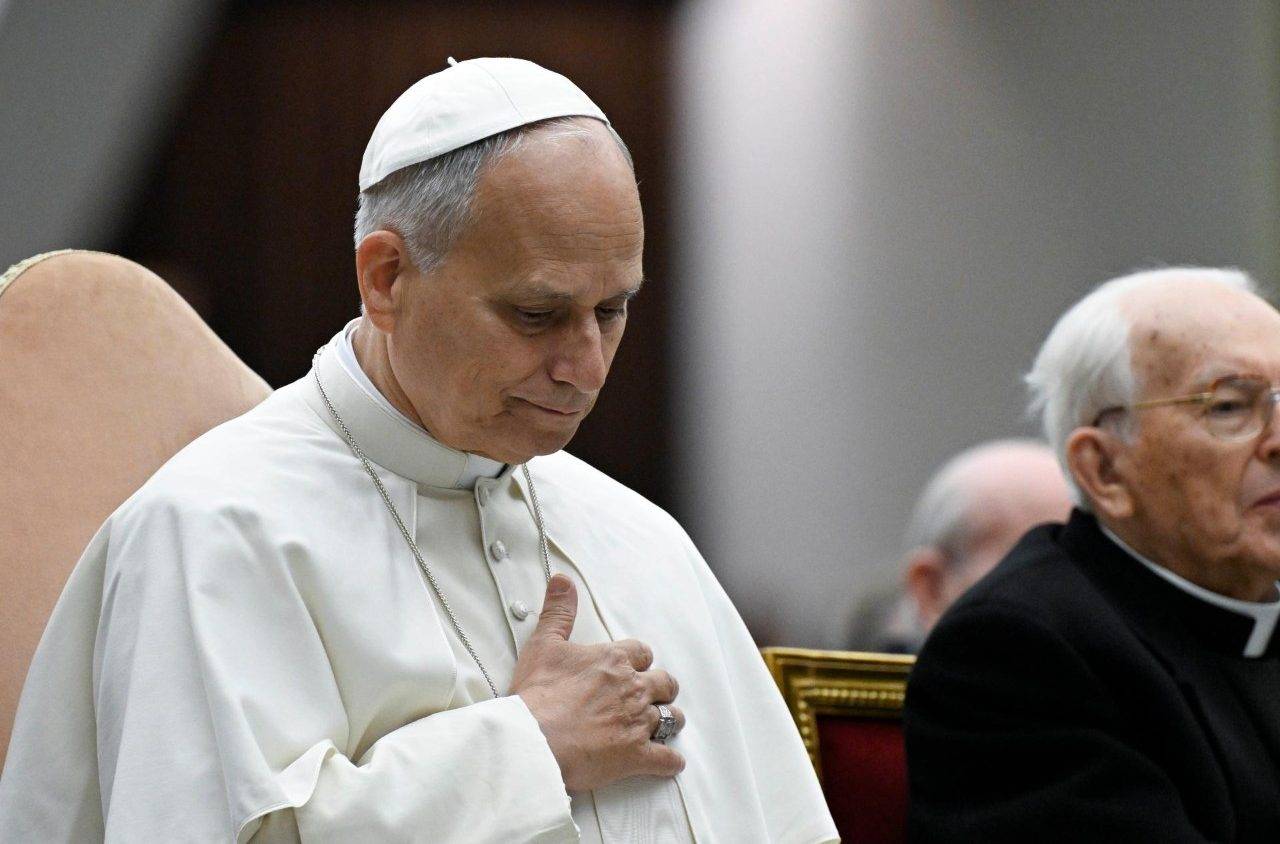
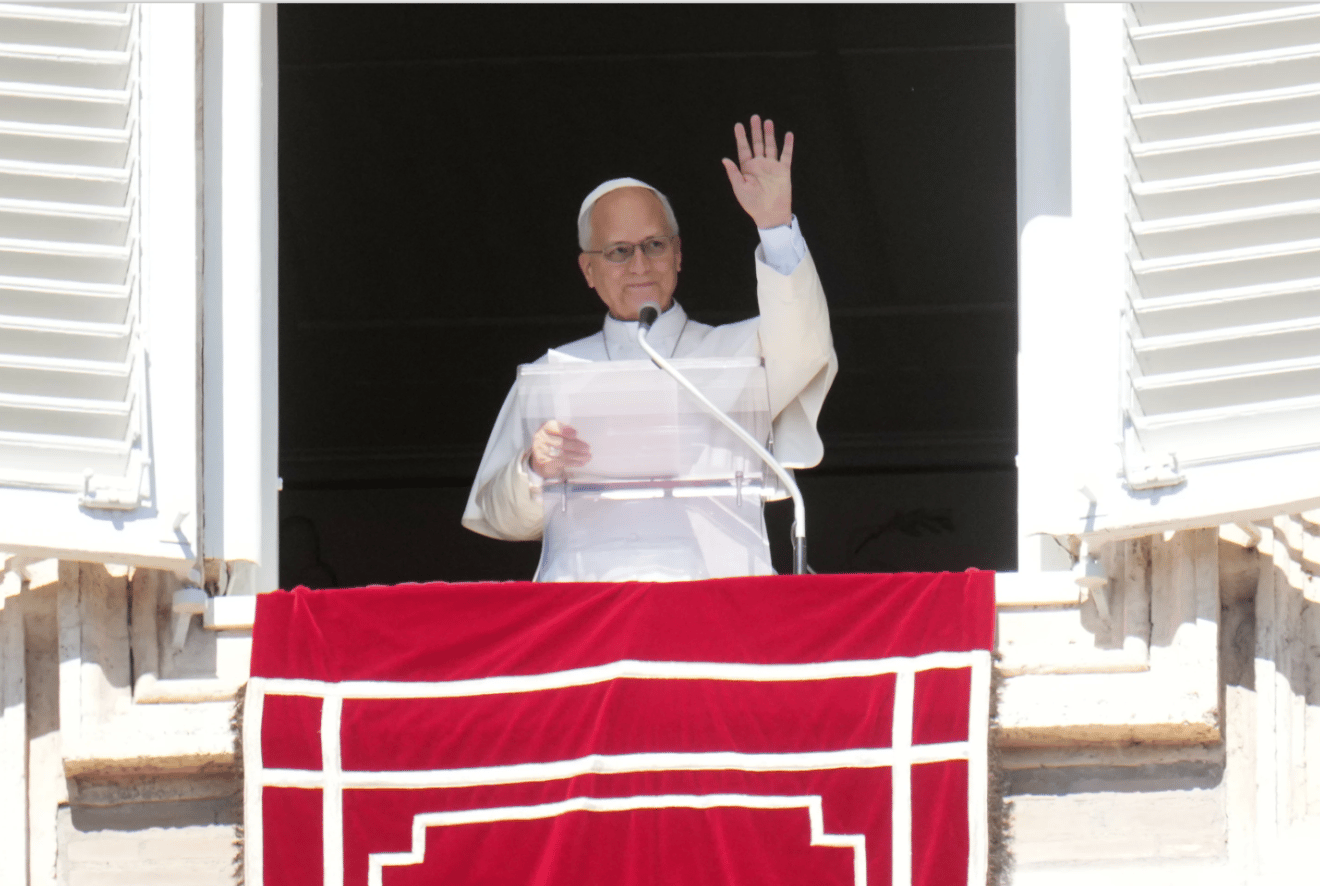
Wrapping up his whirlwind 2-day visit to Equatorial Guinea, Pope Leo’ visit to Mongomo and Bata on Friday showcased the tension that often comes packaged with his new role as leader of the universal Church, as he sought to encourage faithful in one of the Catholic Church’s fastest-growing regions, while also taking national leadership, some who are members of his own flock, to task.
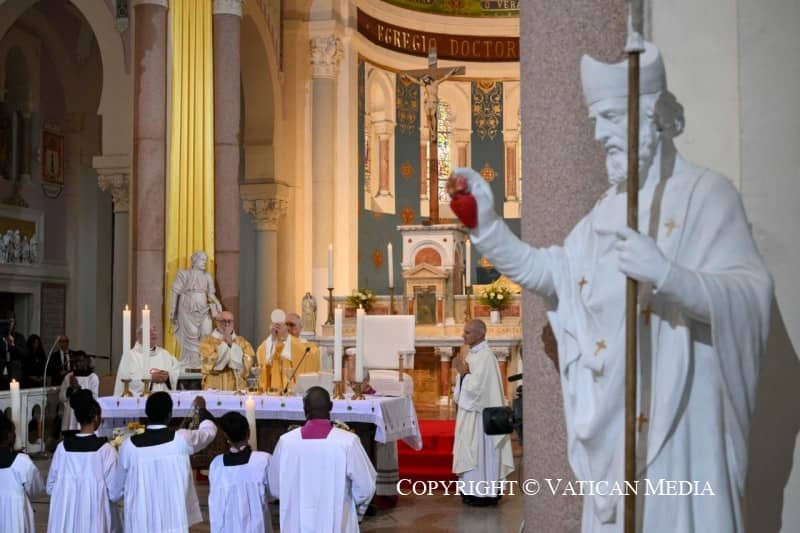
On Friday, Leo made three separate flights in one day, traveling from Malabo – the capital city of Equatorial Guinea – to the eastern city of Mongomo, the birthplace of Nguema Mbasogo, to celebrate Mass at the Basilica of the Immaculate Conception, modeled after St. Peter’s in Rome, and visit a technology school across the street named after Pope Francis.
The pope then traveled to Bata, where he visited a prison, made a pitstop amid a downpour at a monument commemorating victims of a still ambiguous explosion in 2021, and presided over an event for young people and families before returning to Malabo.
Navigating corruption
During his Mass in Mongomo, Leo delivered a homily lauding the evangelizing efforts of the missionaries who brought the Catholic faith to the nation and urged national leadership to engender “a new sense of justice and producing fruits of peace and fraternity.”
“The future of Equatorial Guinea depends upon your choices,” he said, as Nguema Mbasogo and his eldest son Teodoro Nguema Obiang Mangue, who serves as vice president and who faces legal trouble in France, sat in the front row.
He said the country’s fate is entrusted to their “sense of responsibility and to your shared commitment to safeguarding the life and dignity of every person.”
This message was a pointed remark to the leaders of what is, according to the U.S. State Department’s 2023 human rights report, one of the most corrupt nations in the world.
Nguema Mbasogo is considered to be among the most corrupt leaders in the world, as much of the oil-rich nation lives in extreme poverty, while his administration is infamous for extrajudicial killings, disappearances, torture, harsh and even life-threatening conditions in prisons, the incarceration of political detainees, media censorship, and violence against women, among other things.
His son Teodoro, nicknamed Teodorín, has served as Equatorial Guinea’s First Vice President since 2016, and currently faces charges from France’s Supreme Court of laundering public funds.
France’s Supreme Court in 2021 ordered the confiscation of his assets, estimated to be in the hundreds of millions of dollars. In November 2025, however, the U.S. government revoked restrictions placed on the politician after a secret deal was struck in which the U.S. quietly deports migrants to Equatorial Guinea.
According to the Associated Press, as of March some 29 migrants had been deported to Equatorial Guinea. The U.S. government had reportedly denied their asylum claims but offered them U.S. protection, as they faced serious risks to their lives or freedom if they returned home.
However, instead of being accepted into the United States, they found themselves detained and deported, with some only discovering where they had been sent after stepping off the plane.
Jeanne Shaheen, a top Democrat on the Senate Foreign Relations Committee, has called Equatorial Guinea “one of the most corrupt governments in the world.”
Challenging a narrative
As they sat in Mass Friday, Nguema Mbasogo and Teodorín also heard Pope Leo call for the “integral development” and “transformation” of Equatorial Guinea, urging them to ensure that its great natural wealth would be “a blessing for all,” rather than a few.
“May the Lord help you to become a society in which everyone, each according to their respective responsibilities, works ever more fully to serve the common good rather than private interests, bridging the gap between the privileged and the disadvantaged,” he said.
The pope in his homily also prayed that there be “greater room for freedom,” and that “the dignity of the human person always be safeguarded.”
“My thoughts go to the poorest, to families experiencing difficulty and to prisoners who are often forced to live in troubling hygienic and sanitary conditions,” he said.
His reference to prison conditions was a pointed remark to national leadership, as shortly after Mass he flew to Bata and visited a prison immediately after his arrival – a visit that had been carefully choreographed by local authorities to leave a positive impression.
The prison has a capacity for 1,000 but currently houses over 600 inmates, mostly men, with around 30 women also detained there. The prison had been treated with a fresh coat of paint ahead of the pope’s arrival, and the inmates, whose heads were all shaven, had received new orange and beige uniforms and new shoes, a type of plastic sandal.
Ahead of Leo’s arrival, the prison’s chaplain, Padre Pergentino Esono Mba, spoke to reporters as the Minister for Justice, Reginaldo Biyogo Ndong, stood nearby listening in, saying prison conditions are a concern in the country, but implied that the inmates were well treated and had enough to eat.
In his own interview with the press, Biyogo Ndong said the pope’s visit was an honor, and denied human rights abuses against inmates, such as torture.
As Leo arrived, inmates lined up in the prison yard sang and danced as prison staff motioned subtly for them to be more enthusiastic. When it began to pour down rain, the ministers and politicians present ran for shelter, while the inmates stood in the downpour as Leo spoke from his covered platform.
Once the pope left, guards allowed the prisoners, who were singing their final song as Leo took his leave, to break their lines. As they danced and gyrated freely in the prison yard under the pouring rain, they began chanting “Libertad!”, or “freedom!” as the prison doors were shut.
Though the country’s Minister of Justice denied human rights abuses or any form of inhumane treatment in the country’s prison system, Leo urged authorities to ensure their dignified treatment and to foster greater social cohesion.
“The administration of justice aims to protect society. To be effective, however, it must always promote the dignity and potential of every person,” he said.
True justice, the pope said, “seeks not so much to punish as to help rebuild the lives of victims, offenders and communities wounded by evil. There is no justice without reconciliation.”
“This is an immense undertaking. Part of it can happen within prisons, but the greater part must involve the entire national community, in order to prevent and heal the wounds caused by injustice,” he said.
Pope Leo also offered an assurance of God’s closeness to the inmates, saying “no one is excluded from God’s love!” and that each person, in spite of their mistakes and failures, “remains precious in the Lord’s eyes.”
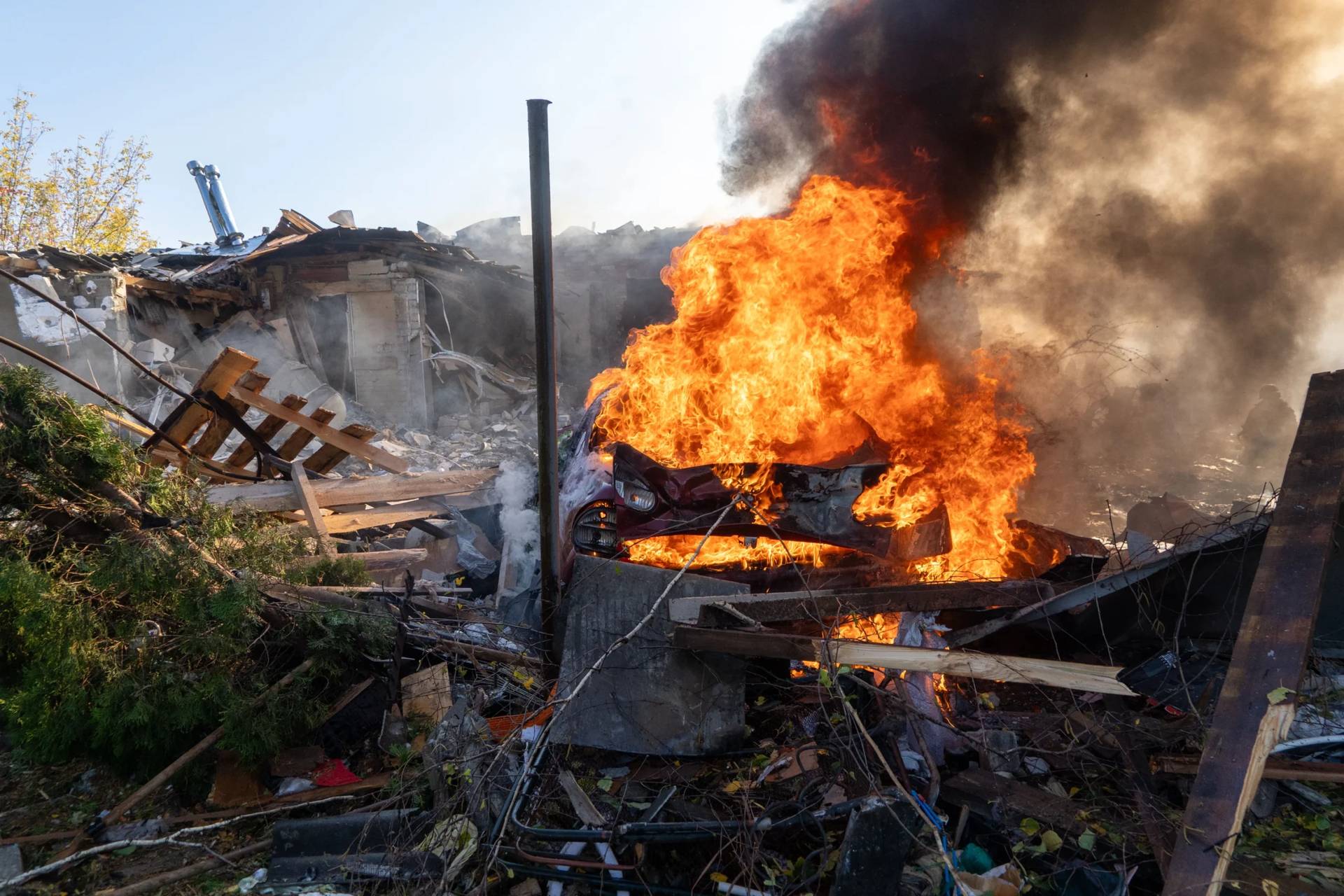
After his visit, Leo made a quick stop to lay flowers at a memorial for victims of a series of explosions in 2021, the cause of which is still murky. A total of 107 people died and more than 600 others were injured in the explosions, which also caused significant damage to infrastructure.
While Nguema Mbasogo attributed the disaster to negligently stored explosives on a base that detonated when nearby farmers burned the fields, human rights groups and the Associated Press have cast doubt on that theory, as there was no evidence of farming nearby, leaving the exact cause unclear.
A tight place and a rock
Leo XIV’s final and most complex full day in Africa was an illustration in miniature of the complexities of his role as pope.
As a world leader, he must engage his counterparts to move the needle on social issues such as healthcare, education and religious freedom.
While engaging with authoritarian personalities such as the leadership of the nations he visited during his 11-day tour of Africa brings legitimate concerns about public perception and the way his presence might be spun as a bid of support, some, such as the case in Equatorial Guinea, are members of his own flock.
Leo thus has the complicated task of seeking to hold leaders such as Nguema Mbasogo to account while also shepherding them and seeking their conversion.
As he prepares to leave Africa, faithful in each country and each city he visited hold out hope for change. While the kind of transformation for which Leo pushed in each place will undoubtedly be a longer-term goal, the seeds his visit planted have offered hope to local populations.
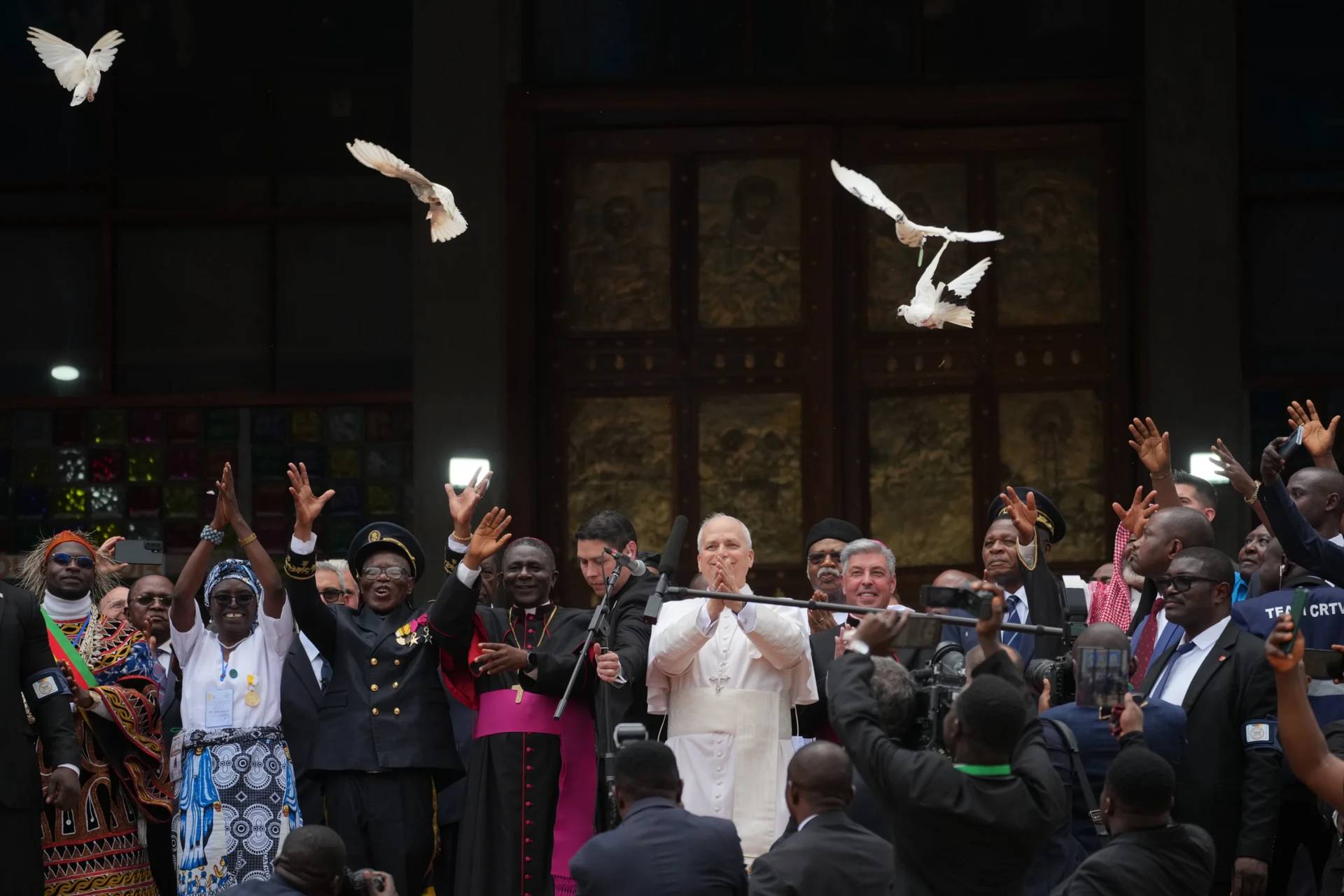
In his final meeting with young people and families Wednesday, who braved hours under the rain to celebrate Leo’s presence with song, dance, and testimonies, the pope offered them a message of hope and encouragement.
He urged those considering a consecrated vocation to have the courage to say yes, saying God won’t disappoint those who choose a life of service, but will return their sacrifice a “hundredfold.” He also urged families to be schools of love, especially young couples considering marriage.
Leo left attendees with both encouragement and a commission, quoting a speech from Pope John Paul II during his visit to Malabo in 1982.
“Always set an example of harmony among yourselves, of mutual love, of the capacity for reconciliation, of genuine respect for the rights of every citizen, every family and every social group,” he said.
He told attendees to “respect and promote the dignity of all people in your country, as human beings and as children of God.”
These words from John Paul, Pope Leo said, “continue to guide our hearts today and should illuminate your path as you prepare for the responsibilities that await you in the future.”
Pope Leo will return to Rome Thursday morning, after celebrating a final Mass in Malabo.
Follow Elise Ann Allen on X: @eliseannallen