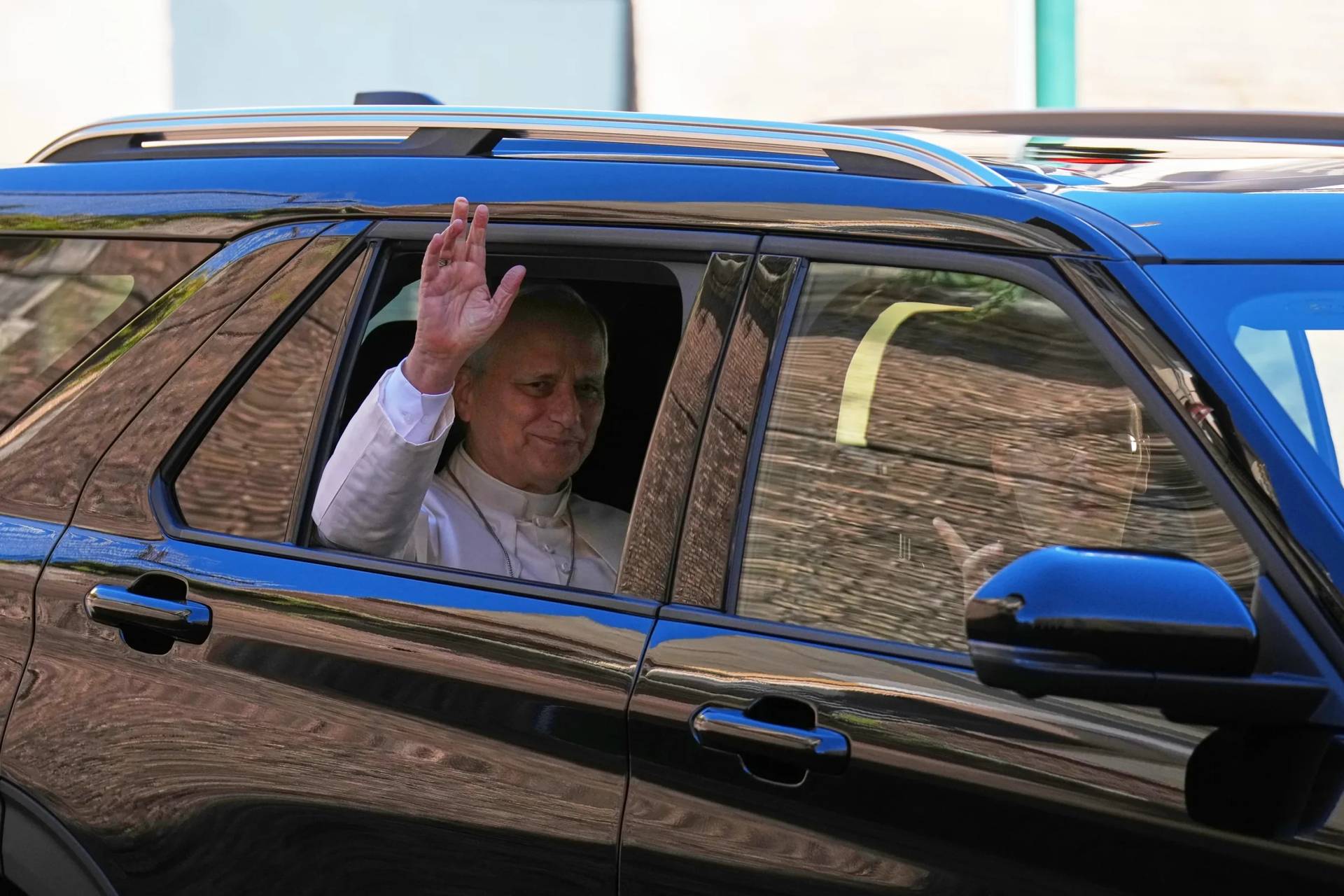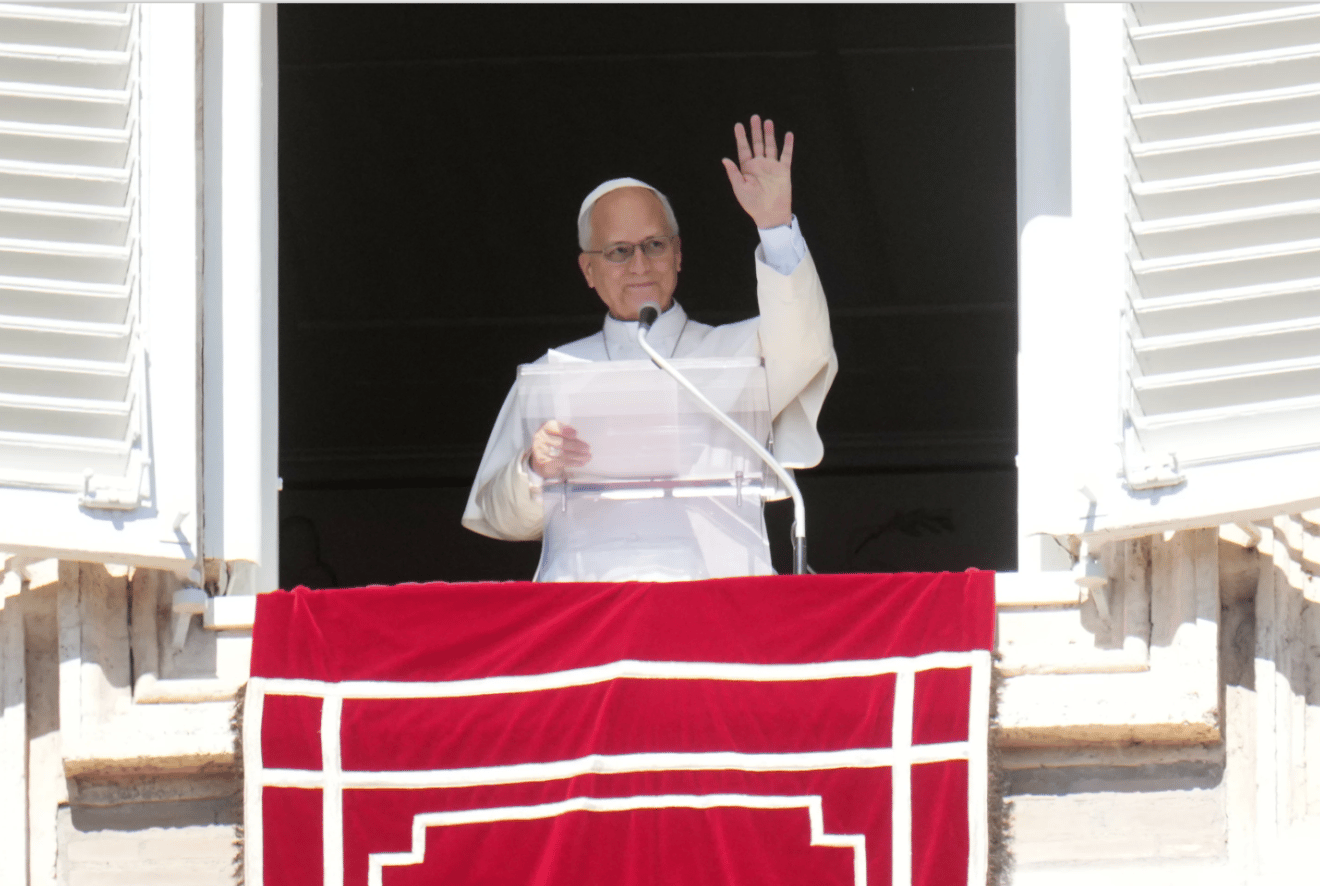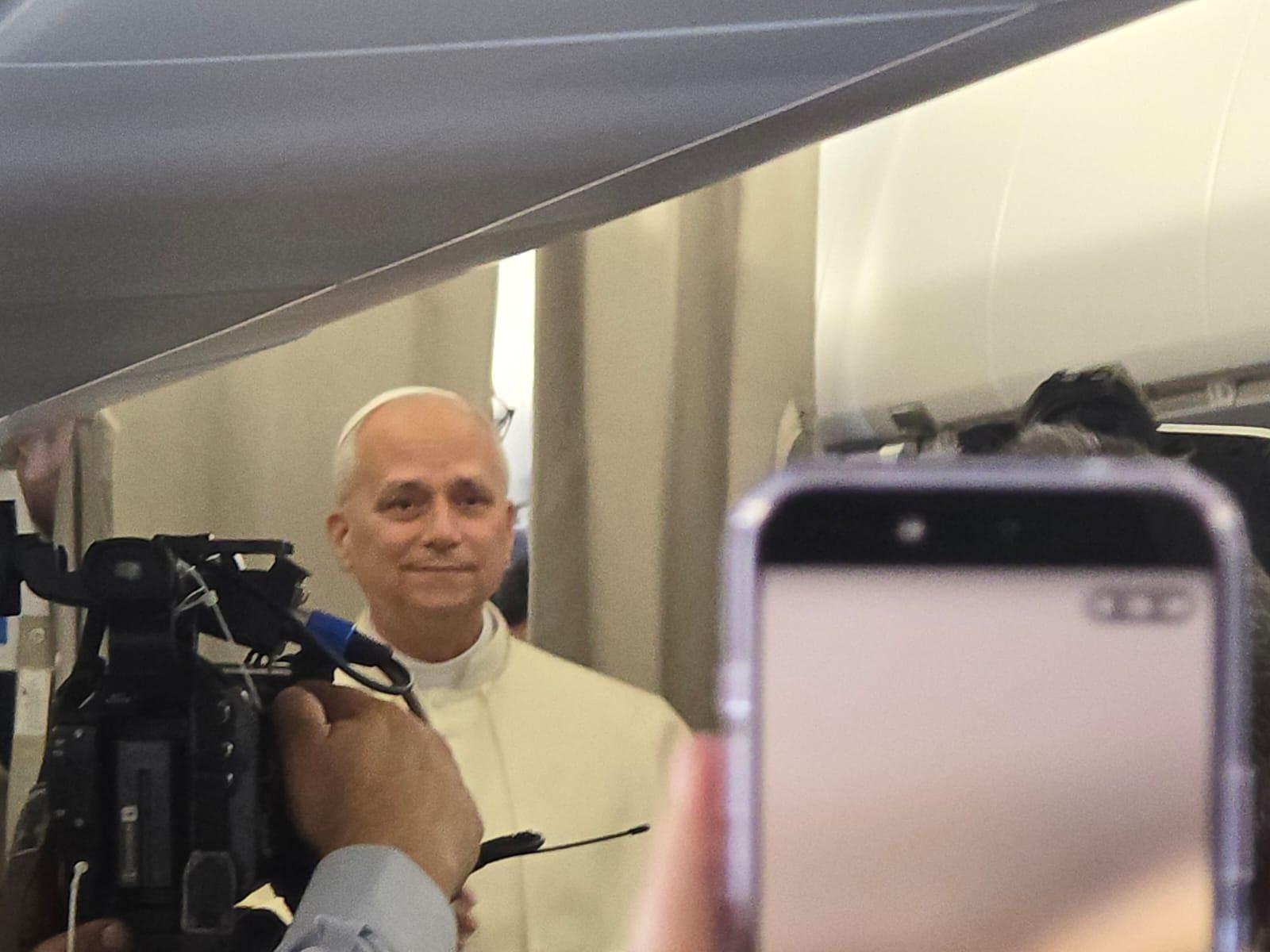
ON BOARD THE PAPAL PLANE – Speaking to journalists on his return flight from Beirut to Rome, Pope Leo XIV spoke about the Holy See’s global peacemaking efforts in Ukraine and the Middle East, as well as dialogue with the German church and the support of Christians in the Middle East.
He also spoke about what it has been like for him to be pope, future travel plans, as well as trepidation among Western Christians over the growth of Islam worldwide.
Questioned about a growing trepidation among western Christians about the growth of Islam outside of the Middle East, especially in predominantly Christian nations in the West, the pope said this was something touched on in his discussions with interfaith leaders in Turkey and Lebanon.
Many of these conversations “concentrated on the topic of peace and respect for people of different religions,” Leo said, noting that this has not always been the situation between the two religions, and that in Europe the fears are real.
However, he cautioned that oftentimes these fears are “generated by people who are against immigration and trying to keep out people who may be from another country, another religion, another race.”
“In that sense, I would say that we all need to work together. One of the values of this trip [is] precisely to raise the world’s attention to the possibility that dialogue and friendship between Muslims and Christians is possible,” he said.
One lesson that Lebanon can teach the world, given its confessional system of government, is that it is a place where “Islam, Christianity are both present and are respected and that there is the possibility to live together, to be friends.”
“Stories, testimonies, witnesses that we heard even in the past few days, how people helping each other, Christians with Muslims, I think those are lessons that will be important also to be heard in Europe or North America.”
In this regard, he urged his fellow native westerners to “be a little less fearful and look for ways of promoting authentic dialogue and respect.”
Pope Leo spoke to journalists on his way back to Rome following a Nov. 27-Dec. 2 trip to Turkey and Lebanon, where he met with national political leaders and attended an ecumenical commemoration of the 1700th anniversary of the Council of Nicaea, which reaffirmed belief in Jesus’s divinity and produced an early version of the Nicene Creed recited during Sunday Masses.
Asked specifically about whether he intended to engage global leaders such as United States President Donald Trump and Israeli Prime Minister Benjamin Netanyahu in bringing an end to current hostilities between Israel and Hezbollah in southern Lebanon, the pope said, “I believe sustainable peace is achievable.”
“I’ve already, in very a small way, begun a few conversations” with some political leaders in the United States and Israel, he said, saying, “I intend to continue to do that, personally or through the Holy See.”
The Holy See has diplomatic relationships with most of the countries throughout the Middle East, he said, saying, “it would be our hope certainly to continue to raise that call to peace.”
RELATED: Pope ends Mass with a call for peace
Referring to a message sent to him by Lebanon’s Hezbollah military wing urging him to condemn Israel for its bombing of Hezbollah targets within Lebanon and whether the Holy See can promote negotiations, the pope said he had several conversations to this effect.
The main purpose of the trip, he said, was ecumenical, to jointly commemorate alongside other Christian leaders in the region the 1700th anniversary of the Council of Nicaea and to meet with Catholic and Orthodox patriarchs in the Middle East.
However, the pope said that during the trip “I also had personal meetings with representatives of different groups who represent political authorities, people or groups who also have something to [say] with the internal or international conflicts in the region.”
“Our work is mainly not something public that we announce on the streets, it is a bit behind the scenes,” he said, saying the Holy See will continue “to try to convince the parties to leave weapons and violence and come together to the table of dialogue to look for responses and solutions that are not violent, but can be more efficient and better for the people.”
Pope Leo was asked specifically about what role Europe can have in the peace process in Ukraine, given that Trump initially cut European leaders out of peace talks, and that a current peace plan includes economic and territorial proposals that many see as putting Europe’s economy and security guarantees at risk.
“This is obviously an important topic for peace in the world, where the Holy See does not have a direct participation because we are neither members of NATO nor of the dialogue until now, even if we have oftentimes asked for a ceasefire, for dialogue and not war,” Leo said.
He said the war in Ukraine now involves “many aspects,” including the increase in arms production, cyberattacks, and the targeting of energy infrastructure, which is a concern now as winter approaches.
“It is clear that on one hand, the president of the United States thinks that a peace plan can be promoted that he would like to do and that at least in a first moment was without Europe, but the presence of Europe is important and that first plan was modified also because of what Europe was saying,” the pope said.
Leo voiced his belief that Italy can play a crucial role as an intermediary between the various parties, including Russia, Ukraine and the United States.
In terms of the Holy See’s role, he it “can encourage this type of mediation and seek, or we seek together, a solution that can truly offer peace, a just peace, in this case in Ukraine.”
Speaking of the current political turmoil in Venezuela and Trump’s threats of military intervention if President Nicolas Maduro does not resign, Pope Leo said the Vatican is working with the national bishops’ conference and the nuncio to find ways to calm the situation.”
“So often who suffers in these situations is the people, not the authorities,” he said, saying their wellbeing must be placed above all else.
Referring to reports of a recent telephone call between Trump and Maduro, the pope acknowledged that “there is the possibility that there be some activity, even an operation to invade Venezuelan territory.”
“I truly believe that it is better to look for ways of dialogue, maybe pressure, including economic pressure, but looking another way to change, if that is what they want to do in the United States,” he said.
Pope Leo also spoke of dialogue with Germany given debate over its controversial internal “Synodal Way” reform process, which has sought, in some sectors, to change church teaching on homosexuality and has promote the ordination of women, among other things.
To quell rising fears between a schism with factions of the German church that have been resistant to the Vatican’s attempt to reign in the process, members of church hierarchy in Germany meet regularly with Vatican officials to discuss national ecclesial reforms and how Germany can move forward, with Rome’s guidance.
“The synodal way is not unique to Germany and the whole church has celebrated a synod of synodality over the past several years,” he said.
While there are both similarities and differences between the national synodal process in Germany and the global Synod on Synodality carried out by Pope Francis in recent years, he said much of the German process “may well continue in the universal church.”
Leo cautioned against perceptions of schism, saying, “I would say there is certainly room for respect for inculturation.”
“The fact that in one place synodality is lived in a certain way and that in other places it is lived differently does not mean that that there is rupture or a fracture I think that is very important to remember,” he said.
He stressed the need for further dialogue “so that no one’s voice is excluded, so the voice of those who are more powerful do not silence or stifle the voice of those who might also be very numerous but don’t have a place to speak up and to allow their own voices and their own expression of church participation to be listened to.”
Pope Leo also stressed the need for Christians in the Middle East to prioritize “unity, friendship, human relationships, communion,” in healing from past wounds and solidifying their future in the region.
“The more we can promote authentic unity and understanding, respect and human relationships, friendship and dialogue in the world, the greater possibility there is that we will put aside the arms of war,” he said.
With this mentality, citizens will be able to “leave aside the distrust, the hatred, the animosity that has so often been built up, and that we’ll find ways to come together and be able to promote authentic peace and justice throughout the world.”
Asked a personal question about his reaction to his own election and what he has learned so far being pope, Leo said he would maintain the secret of the conclave, but jested that “just a year or two ago I thought about retiring someday.”
Recalling how a journalist recently asked him which book to read to understand him better, he recommended “The Practice of the Presence of God” by an author simply known as “Brother Lawrence,” which he said sums up his spirituality well.
The book, he said, offers “a type of prayer and spirituality where one simply gives his life to the Lord and allows the Lord to lead.”
“If you want to know something about me, that’s been my spirituality for many years, in the midst of great challenges, living in Peru during years of terrorism, being called to service in places I never thought I would be called to serve to, I trust in God and that message is something that I share with all people,” he said.
Speaking of his own election, he said, that, “I resigned myself to the fact, when I saw how things were going, that it could be a reality. I took a deep breath I said, ‘here we go Lord you’re in charge, you lead the way.’”
Of course, the issue of future visits was spoken about. Pope Leo said there are unconfirmed plans for Africa and Algeria for 2026, and Latin America for either 2026 or 2027.
Follow Elise Ann Allen on X: @eliseannallen