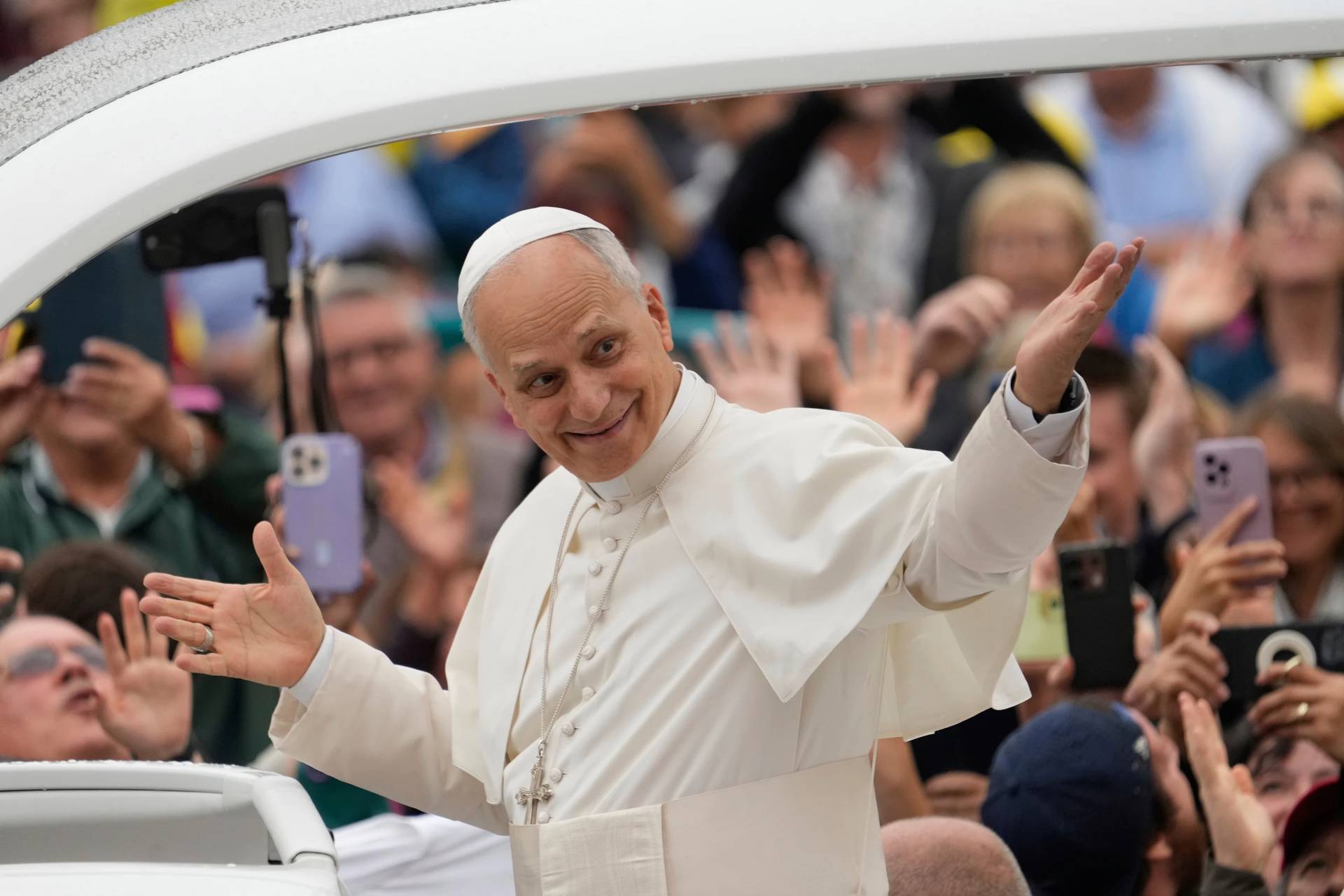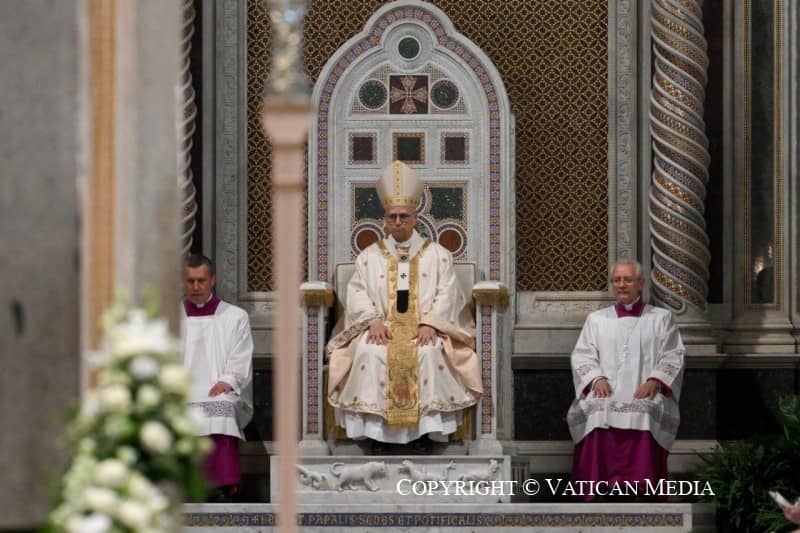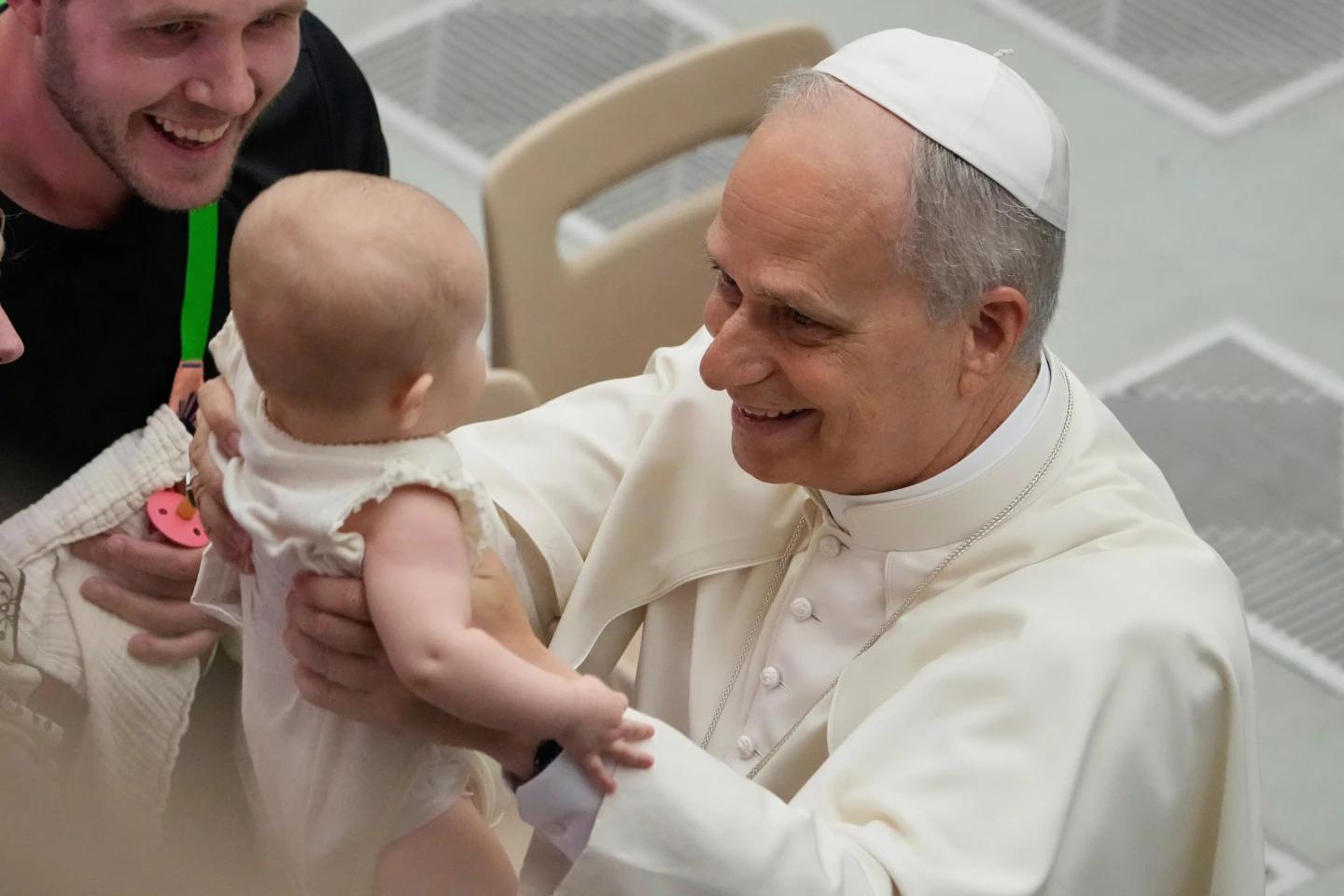
ROME – Pope Leo XIV Thursday announced a new summit on family life to be held in October. The announcement came with a special message to mark the 10th anniversary of Pope Francis’s Amoris Laetitia, a lighting-rod document on family life that was a watershed in his pontificate.
Published March 19 to coincide with the official date of Amoris Laetitia‘s signing in 2016, Leo XIV’s message alluded to new challenges presented by a rapidly changing culture.
Side-stepping the debates that flared up over Amoris Laetitia’s infamous footnote 351, which opened a cautious door for divorced and remarried couples to receive communion, Leo called Amoris “a luminous message of hope regarding conjugal love and family life.”
“Our era is marked by rapid changes which make it necessary, even more than ten years ago, to give particular pastoral attention to families, to whom the Lord entrusts the task of participating in the Church’s mission of proclaiming and witnessing to the Gospel,” he said.
There are places and circumstances within the church and society that can be reached “only through the lay faithful and, in particular, through families,” he said.
“For this reason, the Church’s commitment in this area must be renewed and deepened, so that those whom the Lord calls to marriage and family life can, in Christ, fully live out their conjugal love, and that young people may feel attracted, within the Church, to the beauty of the vocation to marriage,” the pope said.
In this context and given changes that continue to have a significant impact on family life, Leo announced his decision to summon the presidents of all episcopal conferences around the world to Rome in October.
The meeting, he said, is “to proceed, in mutual listening, to a synodal discernment on the steps to be taken in order to proclaim the Gospel to families today, in light of Amoris Laetitia and taking into account what is currently being done in the local Churches.”
Ten years ago, Amoris Laetitia marked a decisive moment in Francis’s pontificate, as conservative criticism of some of his pastoral teachings exploded in the wake of the document’s publication.
As debate over Amoris and its footnote 351 on communion for the divorced and remarried played out, however, supporters of the document and moderates who took a middle-ground position lamented that the light of the document’s broader teachings on family life had been lost to the heat of a debate that was hyper-focused on an isolated issue and largely driven by ideological commitment.
In his message for Amoris Laeitia’s 10-year anniversary, Leo voiced gratitude for the document, thanking God “for the stimulus that has encouraged reflection and pastoral conversion in the Church.”
In this regard, he prayed the church would have “the courage to persevere on this path, always welcoming the Gospel anew in the joy of being able to proclaim it to all.”
Pope Leo, who has dedicated his first catechetical series of general audience addresses to a re-reading of the Second Vatican Council’s major documents, invoked the Council’s teaching on the family.
Quoting the Council’s documents, he said the family is “the basis of society, a gift from God and a school for human enrichment.”
“Through the sacrament of marriage, Christian spouses form a kind of domestic church, whose role is essential for teaching and transmitting the faith,” he said.
Leo noted that since the 1962-65 Second Vatican Council, only two major documents on the family have been published: Familiaris Consortio by Saint John Paul II in 198,1 and Amoris Laetitia by Pope Francis in 2016.
“Both strengthened the Church’s doctrinal and pastoral commitment to the service of young people, married couples and families,” he said.
Amoris Laetitia’s focus on anthropological and cultural changes over the past 35 years, he said, is an invitation not only to reflect on families amid a new socio-cultural context, but also to reflect with them.
“It is not possible to speak about the family without engaging families themselves, listening to their joys and their hopes, their sorrows and their anguish,” he said, quoting Amoris.
He said Amoris offers several interesting and relevant lessons that must continue to be examined, including the biblical concept of God’s love and mercy, “which allows us to live love stories even when navigating family crises,” he said.
Leo also highlighted the document’s focus on strengthening conjugal and family love, marriage as essentially life-giving and an image of the divine, and on identifying new methods of pastoral outreach to families and bettering the education of children.
He also pointed to Amoris’s emphasis to better “accompany, discern and integrate fragility, overcoming a reductive conception of the norm, and to promote the spirituality that unfolds in family life.”
When it comes to failures, difficulties and fragility in families, Leo said this is part of life and is a constant invitation to deepen in love.
“To serve the mission of proclaiming the Gospel of the family to younger generations, we must learn to evoke the beauty of the vocation to marriage precisely in the recognition of fragility, so as to reawaken trust in God’s grace and the Christian desire for holiness,” he said.
Families, the pope said, must be supported, especially those suffering from poverty and violence.
He thanked those engaged in family ministry for their service, and also voiced gratitude for families “who, despite difficulties and challenges, live the spirituality of family love…made up of thousands of small but real gestures.”
Follow Elise Ann Allen on X: @eliseannallen